Showing posts with label Richard Hofstadter. Show all posts

Monday, August 8, 2011

Dog Days Classics: The American Political Tradition


As the combined impact of climate change and the sweltering plague known as Atlanta in August settles upon us, we decided to take advantage of the slow-thinking stupor to go on a walk down memory lane.  This nostalgia trip takes us to the books that we found most influential in undergrad and graduate school -- the texts that were inspiring, that made us want to learn more, or that shaped the way we write about or conceptualize the past.  Each post will look at one book, generally an academic text (if we were writing about fiction or poetry, it would be a very different list), and consider why it was so powerful in its impact.  It would be a pretty dull discussion if each post consisted of "This was a great book!" and "It was very well-written!" so we will also be revisiting these books with an eye to their shortcomings, and how our own take on them has changed in the intervening years.  The earlier books will come first, and generally the ones we read as a doe-eyed college kids, before moving on to more recent works that are classics in the making.  But the first book will be one dear to my heart, that I read in the first year of grad school:


Richard Hofstadter, The American Political Tradition and the Men Who Made It

Hofstadter’s 1948 epic continues to find new readers among undergrads and grad students, as well as the oft-mentioned-but-rarely-observed “educated general interest reader of history.” Trends in historiography may have left Hofstadter far behind, but that may be all to the good in the case of The American Political Tradition. The book’s twelve chapters offer largely psychological insight into major political figures such as the Founding Fathers and the pro-slavery aristocrat John Calhoun, setting them against the social context of their time and probing the deeper casts of mind that led them to craft the Constitution, preserve the union, or oversee the corruption of the Gilded Age in their own particular way. Hofstadter portrays the giants of US political history as men of their time and place, who were nonetheless caught up in circumstances they could dimly understand and scarcely control. Grover Cleveland was an honest but simple-minded public servant, a committed believer in bourgeois virtues of thrift and propriety – in other words, the perfect cipher for an age when moneyed interests were robbing the public blind. Hofstadter cast FDR as “the patrician as opportunist,” who never set out to become a figurehead of radical discontent but who still managed to employ his personal charms and charisma to take advantage of the moment. Lincoln’s “little engine” of ambition brought him to the pinnacle of power, but it also left him with a burden of wartime leadership that he shouldered with a tragic, vaguely Christian sense of responsibility. (If Lincoln was auditioning to be Christ, he was all too aware how the story would end – and that the outcome was out of his hands.)

For me, the finest contribution of The American Political Tradition is its humane approach to people in the past. The book has often been described as “literary,” which is a way of saying it is not as stilted and dry as most academic history (or this blog post). Yet it is literary in another way: like fiction, it goes beyond examining the significance of events to introduce us to recognizable human beings, people with hang-ups, anxieties, and mixed motivations who grope for the right path, as they understand it. Not a lot of historians do this very well, even when they try. Hofstadter’s approach is marked by both irony and empathy for his historical subjects, including the vain and the powerful.

Victoria Woodhull: Non-traditional

The book may benefit from lissome prose and keen insight, but it remains vulnerable to criticism. While not quite qualifying as "psychohistory," the book does examine the past by attempting to deduce the inner mental workings of long-dead historical figures, a reflection of the vogue for Freudian psychoanalysis after World War II. It focuces almost exclusively on men, but that fact is not surprising for a study written in 1948 that deals in large part with presidents (a largely male group in the US). Although it is often classified with the work of “consensus” historians who celebrated America’s liberal democratic heritage in the 1940s and 1950s, the book’s larger insight was simply that basic assumptions about property rights and capitalism seemed to endure throughout US history, regardless of how many divergent personalities passed through the scene:
The sanctity of private property, the right of the individual to dispose of and invest it, the value of opportunity, and the natural evolution of self-interest and self-assertion, within broad legal limits, into a beneficent social order have been staple tenets of the central faith in American political ideologies; these conceptions have been shared in large part by men as diverse as Jefferson, Jackson, Lincoln, Cleveland, Bryan, Wilson, and Hoover.
Hofstadter may have believed in the sturdiness of this creed, but he did not celebrate it. A recovering Marxist in 1948, he still viewed the grasping avariciousness and blind obedience to property that defined American history with bittersweet resignation. It may be that Hofstadter marked the boundaries of American discourse accurately; certainly, today’s political universe in the US seems pinched and impoverished, with even a Progressive president like Barack Obama unwilling to commit to policies that smack of socialism and “big government.” Yet he also may have overlooked the hints of native radicalism that other historians have found among the American revolutionaries, the populist farmers of the South, and the many Americans who made socialism a vital movement in the early twentieth century. Only the abolitionist Wendell Phillips comes across in Hofstadter’s study as a principled radical above the demands of self-interest and retail politics. If The American Political Tradition had been subtitled And the People Who Made It, we might have seen a chapter on Victoria Woodhull, the radical proponent of women’s rights and free love who ran for president in 1872. How did she fit into the tradition? A book like that -- which married Hofstadter’s keen eye for character with a contemporary view of the past -- might reveal a more capacious political tradition than the one found in this (still very good) book.

Alex Sayf Cummings

Wednesday, January 12, 2011

The World in 2011

As regular readers know, we at Tropics of Meta try in all things to be as much like The Economist as possible.  For this reason, we have consulted a distinguished panel of historians, political scientists, fishmongers and Daley machine hacks to weigh in on their expectations for the year 2011.  Their predictions range from likely events in academia and politics to music, fiction, and fast food -- and sometimes a combination of these fields.  So without further ado, we give you the shape of things to come:

...........................................................


The writers of the defunct TV show Lost will admit they were just kidding and air a new sixth season.


Columbia University will outrage animal rights advocates and community activists by showering the site of its new West Harlem campus in a rain of tiny frog fetuses.


To deflect mounting criticism over its monetary policies, the Federal Reserve will plant a rumor on Politico that former chairman Paul Volcker was replaced by a lookalike actor some time in the early 2000s. The “Paul Volcker is dead” theory will become an unexpected viral phenomenon.


Harvard historian Jill Lepore will a conduct a drive-by shooting at Gordon Wood’s Providence residence. Spokespeople for the New Yorker will claim that condescending rhetoric played no role in the year’s increase of white-on-white violence.


You think you big time?


Teaching to the test will no longer confine itself to high school education but will apply to STDs as well.


Robot rights will become a major subject of political debate and ethical concern. Conservatives will complain that the Obama administration values robot life more than human life and warn that FEMA is building an army of clones to imprison Christians. John McCain will express skepticism about laws protecting “the health of the robot.” And in an unexpected reversal, Markos “Kos” Moulitsas will appear on the Sean Hannity show, insisting that “guns don’t kill people, robots with laser eyes kill people.”

j
Secret genius


Failed South Carolina gubernatorial candidate Alvin Greene will be revealed to be the lead character in Sacha Baron Cohen’s latest mockumentary. Joaquin Phoenix will subsequently slide into a Brian Wilson-like spiral of depression. 


University of Wisconsin wunderkind Jeremi Suri will reveal that he has been leading a Montanaesque double life as Canadian pop sensation Avril Lavigne for the last ten years.


A dance craze that mixes elements of the Dougie and the John Wall will sweep Baghdad’s nightclubs, as well as some of its hottest spider-holes.


Surprisingly large influence on Grizzly Bear


Slayer’s South of Heaven will replace Pet Sounds as the new hipster soundtrack, leading to pentagrams constructed out of hand-crafted woodland creatures.


In order to make up for loss of state funding, the University of California system will begin charging students fees for hope.


Zoolander will emerge as the new foundational text on child labor and globalization.


Tron III will be as incomprehensible as Tron I and Tron II, but it will look great.


The Honda Fit will be the new Pinto.


Jury duty will be outsourced to South Asia.


Spoiler alert: the author was dead the whole time


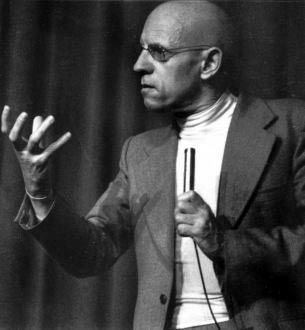
Foucault’s unpublished novel Biographies Are for Losers will make The Girl With the Dragon Tattoo look like a self-published farce.


Sociologists utilizing the ideas of Habermas will create new theories regarding public space and elevators, proving that rapid vertical travel serves as modern day social mobility.


Eating Irish babies will become the new black.


During a press conference on the Obama administration's “new detention policy,” George W. Bush's Barack Obama costume will accidentally unzip while at the podium.


Olbermann smash


Keith Olbermann will die of a heart attack during an on-air “Special Comment” in which he expresses righteous indignation at Sarah Palin's seventh grade paper on reproductive rights.


John Lewis Gaddis will win the Socialist Workers Party’s Excellence in Truthful Reporting about the Boss Class award.

 
“I brake for insurance fraud” bumper stickers will become a national phenomenon.


Heroin chic and competitive eating will merge for a new sport: competitive rehab.


Alan Greenspan will be caught in the Library of Congress sexually molesting Atlas Shrugged.


His circumstance is somewhere between Cabrini and Love Jones


John McCain's hip hop album I Thought I Told You I Ain't No Mother F***** Maverick will top the Billboard charts for 40 weeks straight. Hit singles will include "Build the Dang Fence," "My Friends (and F**** Homies)," "That Hoe Palin," and "No Gays Getting Married in McCeezy's Military."


With circulation dwindling and financial insolvency imminent, Time and Newsweek, two of America's most venerable news magazines, decide to merge. The new magazine will be called Vapid.


The increasing penury of Americans will lead McDonald's to create a new "quarter menu." Items will include McPorridge, McPaint Chips, and McKetchup Packet Soup. Subsequently, Larry Summers will attack McDondald's for its attempt to subvert the free market.


The Replacements’ old mantra “straight to the middle” will become the new motto of the United States.


Richard Hofstadter will come back from the dead.  Upon seeing the state of History, he will kill himself.


Francis Fukuyama will declare The End of Political Science, and with any luck, he'll be right.


Mahmoud Ahmadenijad will try to give Angela Merkel a backrub.


Chicagoans will finally eat vegetables.


"Wrong" will finally become a social construction.


David Brooks will stimulate a conversation about our national character by observing that “America is an argument it has with itself about love.”

.

Monday, January 10, 2011

Dreams of Redemption: The Quasi-Religious World of Conspiracy Theory


Leave it to Americans to invent a religion based on paperwork. Credit card bills. Birth certificate bonds. Form W-8BEN. The Titles of Nobility Amendment. These are the magical totems invoked by followers of something called the Redemption movement, a strange ideological offshoot of White Supremacist and tax resister causes that has ensnared thousands of Americans in a far-reaching conspiracy theory.

I was reminded of the Redemptionist subculture in the aftermath of Saturday’s horrific rampage in Tucson, Arizona, which killed six people and critically wounded a Democratic Congresswoman, Gabrielle Giffords. For many liberals, thoughts immediately turned to the rhetoric of Tea Party favorites like Sarah Palin and Sharron Angle, who encouraged their followers to resist government tyranny by (almost) any means necessary – “Don’t retreat, reload!” Palin declared; we may have to turn to “Second Amendment remedies,” Angle warned. One could be forgiven for connecting the dots between extreme rhetoric and an outburst of violence – perhaps a viewer of Glenn Beck was so enraged by Barack Obama’s Nazi/Stalinist dictatorship that he decided to take matters into his own hands – but most of us should probably have waited until the facts were in.

And what facts they are. The alleged killer, Jared Lee Loughner, is a 22 year old Arizona native who tried and failed to join the Army, named Mein Kampf and the Communist Manifesto among his favorite books, and posted incomprehensible musings on MySpace and YouTube. Loughner’s philosophy defies summarization. His opposition to a currency “that’s not backed by gold and silver” suggests that he might be influenced by the views of Ron Paul, but the bizarre non-sequiturs he posted on YouTube bear little resemblance to the Texas Congressman’s economic philosophy. Loughner appears to dream of starting a “new currency.” He speaks in a series of bizarre syllogisms that make no sense whatsoever, and tells viewers that “Every human who’s mentally capable is always able to be treasurer of their new currency.”


Posse Comitatus meets modus ponens

I recount these facts at the risk of amplifying the voice of a madman who may have intended to commit a horrendous act in order to promote his “philosophy,” such as it is. (His videos have already surpassed a million hits each on YouTube.) It is difficult to choose when faced with the dilemma of keeping quiet about important events or providing a platform for a violent ideology. On one hand, the suspect’s online ramblings seem unlikely to persuade or convert anyone watching at home. On the other hand, some Americans hold views that are only slightly more coherent than Loughner’s – namely, the followers of the Redemption or Sovereign Citizen movement.

Like Loughner, these individuals believe “you don’t have to accept the federalist laws.” Like the alleged killer, they believe that the original Constitution was somehow usurped or replaced by a new system of government that is fundamentally treasonous. Sovereign Citizen beliefs emerged out of the Posse Comitatus movement, a Nazi-inspired group founded in the 1960s that encouraged followers to resist paying taxes and uphold white supremacy. The ideology often included a hefty dose of anti-Semitism, directed at sinister cabals of international bankers who supposedly control the world. Sovereigns believe that the government of the United States was replaced at some point – perhaps during the Civil War, when the first greenbacks were issued, or in 1933, when the nation abandoned the Gold Standard. The new regime put in place admiralty law, the law of maritime travel and commerce. Tax expert J.J. McNab described the Sovereign ideology in a report for the Southern Poverty Law Center:
Since 1933, the U.S. dollar has been backed not by gold, but by the "full faith and credit" of the U.S. government. According to sovereign researchers, this means that the government has pledged its citizenry as collateral, by selling their future earning capabilities to foreign investors, effectively enslaving all Americans. This sale, they claim, takes place at birth.

When a baby is born in the U.S., a birth certificate is issued, and the hospital usually requires that the parents apply for a Social Security number at that time. Sovereigns say that the government then uses that certificate to set up a kind of corporate trust in the baby's name — a secret Treasury account — which it funds with an amount ranging from $600,000 to $20 million, depending on the particular variant of the sovereign belief system. By setting up this account, every newborn's rights are cleverly split between those held by the flesh-and-blood baby and the ones assigned to his or her corporate shell account.
Through workshops and websites, preachers of the Sovereign gospel have taught their followers that they can gain access to this account by filing a series of convoluted legal documents. In the process, they can draw on the cash and free themselves from the rules of the US government. Divided from the fake identity created for them at birth – the one that appears in all-caps on their birth certificate, Social Security card and the like – they are now free, Sovereign citizens, subject only to a common law of their own deciding. The appeal of such a vision in economic hard times, when millions are hounded by debt and despair, is not hard to understand. Sovereigns refuse to pay for hunting licenses or child support, drive with a license, or file taxes, and they assault the courts with hundreds of confusing documents that cause cases to drag on and on. Once committed to this course, believers hope to find a tax-free paradise of no rules, and some have erupted in violence when the illusion crumbles.

This conspiratorial and fantastic view of the world may seem hard to believe, but it has its followers. A group called the Guardians of the Free Republics, inspired by Texas radio host Sam Kennedy, has demanded that every one of the nation’s fifty governors step down, while declaring that it has set up common law “juries” across the country to establish a new government. Wesley Snipes appears to have embraced such theories when he declared himself a “non-resident alien” and failed to pay taxes, leading to a three year federal prison term that began last month. 

I just saved a bunch of money on my car insurance by switching to white supremacy

The Sovereign Citizen movement makes the Tea Party’s fantasies of a Marxist dictatorship look a lot less crazy, but the two groups have bled into each other to some extent. Just ask Bob Inglis, a staunch conservative who served for years as a Republican House member from South Carolina. Despite his record, Rep. Inglis suffered a crushing defeat in the Republican primary last year. Most commentators attributed the loss to a few critical words he said about Glenn Beck, and undoubtedly this misstep hurt his chances. But after the election, Inglis described some bewildering experiences he had out on the campaign trail. During a meeting at a constituent’s home:
I sat down, and they said on the back of your Social Security card, there's a number. That number indicates the bank that bought you when you were born based on a projection of your life's earnings -- I'm gonna try and not laugh here -- and you are collateral. We are all collateral for the banks. I have this look like, 'What the heck are you talking about?' I'm trying to hide that look and look clueless. I figured clueless was better than argumentative. So they said, 'You don't know this?! You are a member of Congress, and you don't know this?!'
Inglis was either part of the conspiracy or totally clueless. In any case, that particular group of voters likely had little use for him. One can sympathize with the Congressman’s confusion, as he spent years catering to a conventional checklist of conservative causes – pro-life, school prayer and the like – and did not know what to make of this baffling narrative offered by his equally baffled voters.

Historians have a stack of easy explanations for this sort of thing. We can point out the awful economy as a strain that might drive many ill-informed and desperate to a strange but promising solution to their problems. Looking further, we can see the roots of Sovereignism in the tax revolts of the 1960s and 1970s, when many middle-class Americans, particularly in the West, mobilized to fight government spending and taxation that they believed violated their property rights and squeezed them out of the American dream. As journalists and pundits often do, we can turn to Richard Hofstadter’s thesis about “the paranoid style in American politics”; in 1964, Hofstadter looked at the rise of the John Birch Society and other right-wing groups and noted that Americans had a habit of turning their anger and frustration toward imagined enemies. Some of the Populist farmers, for instance, who organized against economic injustice in the late nineteenth century blamed their problems on the nefarious doings of Jewish financiers, a common trope that has unfortunately been adopted by many American political movements.

Bernard Bailyn illuminated the deep origins of such thinking in his work on the American Revolution, showing how many colonists believed in an epic conspiracy theory about the “rights of the Englishman.” Before the Norman conquest of 1066, colonists believed, the English had lived in a state of equality, but years of political chicanery had turned the people from free men into slaves – particularly in America. The English had a special dispensation of freedom as their birthright, and the forces of tyranny were closing in from all sides. In fact, the colonial-era rhetoric about England as the last reserve of freedom in a world of despotism certainly reminds one of the truism that America is the world’s last, best hope for democracy. In any case, the emotion kernel of this view is that we are special; we have rights that have been denied by some kind of extraordinary malfeasance.

There are other sources in American culture for the dreamlike thinking of the Sovereign Citizens and a lone nut liked Jared Loughner. America has been fertile ground for new religions and belief systems, giving rise to traditions like the Church of Latter Day Saints and the Nation of Islam. Many homegrown ideologies straddle the line between cult and movement, as enterprising Americans have used their powers of oratory and persuasion to sell every kind of snake oil from Scientology to aesthetic realism. Conspiracy theories like Redemption speak to a religious sensibility that there is a world behind the world we see – the workaday life of paying taxes and getting screwed by your employer is a kind of maya, an illusion, behind which the real truth is hidden. Esoteric methods of prayer, study, or fasting can give a seeker access to this truth. For the Sovereign Citizen, the key to opening that world is a Form UCC-3 – the perfect talisman for a modern life that seems to be made up of hard luck and bureaucratic traps.

Some Sovereigns look back to a Constitutional amendment proposed, but never passed, in 1810. The origins of the Titles of Nobility Amendment (TONA) are obscure and not worth explaining in detail here, but the basic idea was that any American who accepted a foreign “title of nobility” would lose his or her US citizenship. Some conspiracy theorists believe that the amendment was, in fact, passed but has since been suppressed, and some have attempted to use TONA to expose the illegitimacy of the American system of government, as in the 2003 case Sibley v. Culliver:
These documents allege in great detail a complex conspiracy by an illegal monopoly, the American Bar Association, which resulted in a take-over of the judicial systems of this country, both federal and state, by the ABA and its related entities… It is then alleged that the ABA-controlled system is illegal and in violation of what is referred to as the "missing Thirteenth Amendment," to the United States Constitution, which stated that any person who accepts a title of nobility forfeits his United States citizenship and which Amendment was ratified but subsequently hidden or excised from the law. Since lawyers and judges accept the titles "Esquire"/"The Honorable," it is argued, they are not citizens and the entire judicial system is illegal…
Personally, I don’t find it surprising that some people refuse to believe that this Amendment never became part of the US Constitution. The authorities are often wrong, and such stubbornness reflects an unwillingness to accept conventional wisdom that, of course, can be carried too far. My grandmother once told me that George Orwell’s 1984 was a polemic meant to warn people about all the horrible things that would happen in the year 1984; when I told her that we read it in school and it was actually a fictional story about a guy named Winston Smith, she concluded that the book must have been changed to hide the truth. 

The original was better

Conservatives like David Frum and Bruce Bartlett have recently written worryingly of “epistemic closure,” in which people of any persuasion wrap themselves in a cocoon of opinions that concur with their own. People can surround themselves with entirely conservative media or entirely liberal media, hearing nothing that upsets their predetermined view of the world. In such a condition, there are no commonly accepted facts and thus no mutually recognized meanings. It’s a long way from “universal healthcare” to “death panels,” after all. In one of his strange video posts, Loughner asked a question that we may ask of many people who believe in spectacular conspiracies, like the Redemptionists or Loughner himself: “What’s government if words don’t have meaning?” 

Alex Sayf Cummings