Showing posts with label the Left. Show all posts

Thursday, September 15, 2011

Essence Precedes Existence? The Problem of Identity Politics in Hurewitz's Bohemian LA

What does it mean to “be” white, or black, or gay, or working-class? How might a Jewish Ethiopian-American who grew up in poverty but now has a big bank account define himself? Which identity matters most – the current status of wealth and privilege, the experience of coming from a hardscrabble background, or Jewishness or Africanness or national identity (native or adopted)? Does one dimension of identity actually have to subordinate the others? Our current president is almost always described as being black, despite having one white parent and growing up almost entirely with a white family. His own experience is far more complex than our contemporary framework of race and identity allows, a fact he explored in Dreams from My Father to much praise but little apparent understanding. When it comes to identity politics, as Ani Difranco once said, “Their eyes are all asking are you in or are you out – and I’m like, what is this about?”


Daniel Hurewitz’s impressive first book, Bohemian Los Angeles, attempts to provide a historical account of why we even ask these questions today. It shows how identity, particularly sexual identity, became a rigid and essentialized category as it became political over the course of the twentieth century. One’s political Identity has come to be associated with what Hurewitz calls one’s “essence.” Beginning in Los Angeles’s burgeoning Edendale community at the turn of the twentieth century, Hurewitz explores a world where manhood and womanhood were considered certain, consistent, even immutable; given this underlying certainty about gender, men like Julian Eltinge could “impersonate” women with thrilling exactness without compromising their identity as men.
.
A reader is right to question this schema, given Eltinge’s own clearly exaggerated self-presentation as a virile “manly man” when he was not (technically) performing. Hurewitz suggests that the star female impersonator’s PR spectacle of strength and manliness off-stage served to reinforce the remarkable quality of his transformation as a prim, demure, completely believable woman – which is no doubt true. Yet evidence suggests that Eltinge did have sex with men, a fact he was no doubt eager to keep secret, and his self conscious display of masculinity can also be read as an effort to dispel any doubts about his personal character (or what later generations would think of as “sexuality”). Other female impersonators had more feminine off-stage personalities, and they may have been suspected as being less manly (or straight) by the public. Hurewitz understandably focuses the most on Eltinge, due to his greater popularity and accessibility as a public figure, but one wonders if his dual identity as macho man and master female impersonator is really typical of or representative of men who performed in such a way (and who may have been more “queeny” than Eltinge). In short, Eltinge’s example may not adequately capture the experience of men who dressed as women or had sex with other men in this period.


Julian Eltinge at work

In any case, Hurewitz’s argument is that gender identity was more fixed in the early twentieth century, or at least undisturbed by the possibility of alternative conceptions of sexuality, such that people were more comfortable with a flexible approach to performing gender and sexuality then than in later years. Men could imitate women or have homosexual encounters in clubs and public parks without thinking of themselves as gay, bi, or transgender. Hurewitz is trying to tell a story both about how gay identity itself became conceivable and how such identity (along with others, such as race, ethnicity, and gender) became perceived as political constituencies.

It’s an ambitious project, and as a result it has many moving parts. Hurewitz attempts to link the emergence of a boho urban hipster milieu (Edendale and the broader Silver Lake area of LA) with the development of Communism as an essential identity, first for the party faithful in their tight-knit communities and then with the onset of post-World War II repression that made “being” Communist an irrevocable condition, an unwashable stain that disqualified one as a legitimate participant in political life or even the workforce. Along the way he discusses the idea of interracialism, the political fortunes of Japanese and Mexican Americans in Depression and wartime LA, and, most importantly, the influential project of the first gay rights movement in the US, the Mattachine Society

This epic skein of interrelated political events does not always hold together. Showing how female impersonators in the 1910s relate to the political status of Mexican Americans and the zoot suit riots of the 1940s, for example, is not easy, but Hurewitz has still accomplished a significant historiographical feat. The Mattachine Society proposed “homophile” as a public identity, not merely a furtive secret or subterranean practice, confined to fleeting encounters in bathrooms and bars. Through the vision of Harry Hay, Mattachine imagined gayness as equivalent to blackness, Mexicanness, or Jewishness – a critical and ultimately persuasive point in Hurewitz’s overall argument.

Harry Hay

But is being gay or Communist really the same as being black, Jewish, or Mexican? Perhaps they are not exactly the same, but are they even of the same order of difference? A Communist could relocate (many did) to a different state and not necessarily be marked as Red, but it was much harder for a black person to stop being black. (Hard, but not impossible for some.)

This comes to the greatest weakness in Hurewitz’s provocative and thoughtful book – his concept of essence or “inner life.” He aims to show with Bohemian LA how people’s interior worlds came to have political meaning akin to one’s outward identity as a worker or farmer or businessperson, or any other economic or political status. In other words, he seeks to answer the question of why Americans’ cultural, racial or sexual identities came to surpass class as a prime political consideration in the late twentieth century, which is, of course, a widely remarked upon phenomenon. Liberals in particular have bemoaned this shift, exemplified by exit polls that showed “moral values” to be the top concern of voters in the 2004 presidential election. Surely moral values reflect one’s “inner life” more than the economy as a political issue. (Many Evangelical Christians likely view their faith as the most salient fact about their political identity, not unlike the passionate, one might say obsessed, Communists of 1930s Los Angeles.)

Yet this argument runs into some trouble. In what is otherwise a lucid and deftly written book, Hurewitz’s language gets notably fuzzier when he starts talking about essence and the inner life. The passive voice creeps in, and the author seems to be on less sure footing. Rightly so. Skin color and race are simply not internal essences in the way being Muslim, or gay, or a postmodernist might be – though blackness or Asianness may have come to be seen as essential, unchanging identities by many Americans in the years since WWII (and not just in the generalizing and universalizing minds of racists, but in the way African or Asian Americans view themselves). Moreover, one can reasonably question whether essence or an interior life became important for American politics only in the twentieth century. Certainly, identities such as white, Irish, black, Northern, Southern, Transcendentalist, abolitionist, woman (think of republican motherhood, the domestic sphere, the suffrage movement), Democrat, Republican, or any number of ethnic self-identifications played a major role in the passionate and participatory politics of the nineteenth century.

Ultimately, the link between a gay or homophile identity and political or racial identity – the idea that one’s identity as a man with a feminine persona, or a man who has sex with other men is an essence of the same order as being Communist, or Jewish, or Mexican – still feels tenuous and hypothetical. The Mattachine Society sought to articulate such a vision of a common minority political project, but it remains unclear whether they affected the way other groups thought of themselves or were thought of by others. No doubt the author would echo the words of Michael Hardt and Antonio Negri:
Race is just as much a political concept as economic class… Neither ethnicity nor skin color determine race; race is determined politically by collective struggle. Some maintain that race is created by racial oppression, as Jean-Paul Sartre, for example, claims that anti-Semitism produces the Jew. This logic should be taken one step further: race arises through the collective resistance to racial oppression. (Multitude, 104)
In other words, race is not a fact in and of itself – it is created by racism, or, better still, in the struggle against racism that generates a self-concept shared by members of the repressed group. In this sense, it was the struggle of gays, blacks, Mexicans, Jews and Communists against exclusion and injustice that created their identities, and led to their recognition as political interests based on identity.

 

That this struggle created a world in which racial and sexual identity is more rigid and essentialized than before is one of the great ironies of this book. People who identify as bisexual, for instance, often feel marginalized by both straight and gay communities, thanks to the widespread belief (reinforced by the debatable view that people are “born gay”) that a person who sleeps with both men and women is simply a gay or straight person who went off the reservation. Similarly, contemporary discussions of race seem to fall into clichés of whiteness, blackness, Mexicanness and so forth – a comic goldmine that has been exploited by the brilliant (Dave Chappelle) as well as the decidedly un-brilliant (Carlos Mencia). The blog Stuff White People takes a pre-existing assumption of white racial identity and jumbles it with class and subcultural stereotypes, proposing (only half-kiddingly) that all white people are bourgeois urban hipsters who love Animal Collective and complicated sandwiches. The idea of blackness has at least received a more nuanced and intelligent discussion in recent years, though an observer like Randall Kennedy – who has been on the wrong side of accusations of selling out and racial betrayal before – still feels compelled to argue that the boundaries of blackness ought to be policed for African Americans to retain a distinct and coherent identity. Rich Harvard law professors apparently make the cut; African Americans who do not meet his definition of blackness need not apply.

Studies estimate that fully a fifth of the so-called Millennial Generation (Americans born since 1982) have one foreign-born parent. I do not have statistics close at hand for how many young Americans come from mixed-race families. Whatever the numbers may be, a new generation of multiracial, ambisexual Americans may have to find a voice to awaken themselves and the rest of society to the apparent truth that identity is, in fact, fluid, and essences are not always so essential.

Alex Sayf Cummings

Monday, August 29, 2011

Building the Perfect Echo Chamber: The 1970s and Political Discourse in the 21st Century


Just before Bob Dylan breaks into “Like a Rolling Stone” on his 1966 Wembley Hall Bootleg series album, one audience member yells “sell out” while another cries “Judas” -- both references to Dylan’s famous transformation from earnest urban folkie to ironic electric hipster. Dylan growls into the microphone, “I don’t believe you,” then as several moments pass by bellows, “You’re a liar!” As the band cranks into the song, you can clearly hear an angry Dylan scream “Play it fucking loud!” Ten years later, during his Rolling Thunder Revue (1975), a crowd member sarcastically begged Dylan “to play a protest song.” The audience laughed and Dylan and the Band ripped into “Oh, Sister.” Not quite the ideological heights of 1966.
.

Regardless of one’s musical preferences, one can agree the career of Bob Dylan spans several decades, often reflecting the currents of the time. If the 1966 concertgoers mirrored the self-righteous sincerity of the 1960s, Dylan’s jaded ironic 1975 audience epitomized the kind of altered consciousness of the decade that followed. As Bruce Schulman has noted,“[s]eventies sensibility then offered a kind of antidote to the melodrama of Sixties sensibility, an antidote devised by a generation of youth just plain sick and tired of being told how they missed out on the glory days.” (158) In many ways, the 1970s laid the groundwork for the mi x of ambivalence and divisiveness that have come to characterize late 20th century and early 21st century American life. Swaying between ironic indifference and froth mouthed partisanship, it would seem Americans either check out completely or are compelled to descend into sharp divide.
For those born in the latter half of the 1970s, for much of our lives, Republicans and the New Right seemed to be the driving force in American political and cultural life. Gerald Ford, Ronald Reagan, Bill Clinton (zing! Ok, not fair, but undoubtedly Clinton’s agenda was heavily influenced by Reaganite philosophies that even former members of the New Left felt obligated to adopt or engage) and both Bushes served as presidents for the vast majority of Generation Xers’ lives. It would be foolhardy to claim that it had no effect; my own understanding – and I suspect others born within a similar time frame – was colored by this experience. From birth to adulthood, America appeared to be center right, conventional, big business oriented, and increasingly privatized. Culturally, outside of L.A., NY, San Francisco, and a handful of other U.S. cities, America seemed more invested in conservatism than the avant garde or bohemianism.
.

Of course, this view ignores the long trajectory of 20th century political history. In fact, for decades the New Right appeared an unattractive aberration to the largely Democrat-led consensus governments that ruled throughout much of the postwar period. From some vantage points, the 1970s appear liberal to a fault. Even looking at the high school yearbooks of some of my older high school teaching colleagues revealed a very different America from the one most of Generation X experienced. One of my coworkers shared her early 1970s yearbook with me pointing out thinly veiled pot jokes - the kind that would have earned me a suspension in the 1980s or 90s- and odd sexual innuendo. Politically, both presidents Nixon and Carter seriously considered decriminalization and even legalization of cannabis. While the medical marijuana issue continues to gain converts, for much of the 1980s and 1990s, the drug remained an anathema. Three relatively new books examine how, as Professor Alex Cummings related in an email to the author, “white, straight, homogeneous, New Deal-era American culture began to fragment in the 60s and 70s": Rick Perlstein’s Nixonland, John McMillian’s Smoking Typewriters, and Edmund White’s City Boy.

If one wanted to think about this more simply (like primate simply), consider popular culture. Children coming of age in the 1980s had St. Elmo’s Fire, Wall Street, Ordinary People, and The Breakfast Club. Adolescents and adults of the 1970s had Five Easy Pieces, Easy Rider (okay, not quite the 1970s but pretty damn close), Chinatown, and Breaking Away. So what happened? How did a country that appeared worried about endemic corruption (Chinatown) and viewed the promise of the American dream warily (Easy Rider/Five Easy Pieces) become a nation of navel gazing yuppies (St. Elmo’s Fire/Breakfast Club) that only occasionally deemed the actions of big business as nefarious (Wall Street)?
.

Certainly, economic shifts of the 1970s had a deep effect on American culture and politics. As T of M has explored, many historians trace the shift to the early 1970s connecting deindustrialization, the end of Fordism, stagflation, government corruption and a brutal energy crisis as the driving forces of this change. In addition, the rise of New Right figures such as Barry Goldwater, Richard Nixon, Ronald Reagan, William F. Buckley, and Bill Kristol harnessed a right wing movement, once populated by John Birchers and anti-Semites, into a political juggernaut that would dominate the country’s politics in the last third of the century. Yet, by the 21st century, the conservative movement of the 1970s no longer satisfied modern day right-wingers. Richard Nixon would probably struggle to win a Republican primary today, let alone a national election. Where did this shift begin? How did the “Silent Majority” emerge? Who were they responding too? What countervailing forces affected it? What about those who placed themselves outside the suburban Silent Majority, who chose to reside in New York City, the epitome of 1970s decline?

Nixon and Smoking Typewriters .
Nixonland: it is the America where two separate and irreconcilable sets of apocalyptic fears coexist in the minds of two separate and irreconcilable groups of Americans … Nixonland is what happens when these two groups try to occupy a country together. By the end of the 1960s, Nixonland came to encompass the entire political culture of the United States. It would define it, in fact, for the next fifty years. (Rick Perlstein, Nixonland: The Rise of a President and the Fracturing of America, 46-47)

Modern day America, if one were to oversimplify, often seems split between those who watch Fox and those who watch MSNBC . I guess everybody else watches CNN or more likely just doesn’t pay attention. “The parties have reorganized themselves along ideological lines, as white conservatives have abandoned the Democrats and northern liberals the Republicans,” a recent Economist article observed. “The ideological factions have built mighty propaganda machines stretching from Washington think tanks to the studios of Fox and MSNBC. And ideologues have resorted to previously taboo weapons, such as the threat of default.” (Economist, “American idiocracy”, Aug 13, 2011) How we got here is the subject of Rick Perlstein’s Nixonland: The Rise of a President and the Fracturing of America.
.

The value of Nixonland lies in Perlstein’s ability to contextualize Nixon within the zeitgeist of late 1960s and early 1970s America. In reality, Nixon was less ideologue than political operator. According to Perlstein, Nixon’s main interest lay in foreign policy. In Tricky Dick’s mind , domestic politics served as little more than political theatre. Speaking to Theodore White Nixon once opined, “I’ve always thought the country could run itself domestically without a president.” (393) However, Nixon utilized the stage as few others. In language eerily reminiscent of today, Nixon castigated the “liberal media,” gave cultural but not economic recognition to the working class, and critiqued anti-war protesters and others by claiming their work emboldened the enemy. Take Nixon aid Bob Haldeman, for instance, telling Barbara Walters on the Today show that “Democrats still opposing the president were aiding and abetting the enemy of the U.S.” Nixon followed this up shortly after arguing that Democratic opposition regarding his decisions in Vietnam, “might give the enemy an incentive to prolong the war after the election.” (623) Sound familiar?

Perlstein portrays the late 1960s and early 1970s as a rapid fracturing of the American public. The Vietnam War, leftist and rightist radicalism, and a faltering economy combined to place strain on the very seams of public life. Though many writers highlight the violence of the extreme left like the Weatherman, Perlstein points out, far right extremists employed similar tactics just as frequently but the media reported on these events far less frequently. Perlstein illustrates how a chastened media felt compelled to represent America’s great middle classes more equally. When journalists critiqued Mayor Daley’s handling of the 1968 Democratic Convention, letters poured in chastising the media and praising the aggression of the Chicago Police Force. When in 1972 National Guardsmen shot dead four Kent State University students, citizens opposing the student protests provided their own response. “I extend appreciation and whole hearted support of the Guard of every state for their fine efforts in protecting citizens like me and our property,” wrote one. Another lamented “When is the long suffering Silent Majority going to rise up?” A local resident speaking to a researcher uttered a common feeling for many of the period. “Anyone who appears on the streets of a city like Kent with long hair, dirty clothes, or barefooted deserves to be shot,” related the Kent City citizen. (489) Letters and responses greatly circumscribed media coverage in the decades that followed. Nixon successfully exploited this hostility.
.

Contrary to popular belief, youth movements of the day were not dominated entirely by leftists. At Queens College, where radicals “rampaged” through the library and occupied administration buildings, another conservative group referred to as the Students Coalition held a sit in in the registrar’s office in order to protest the “college president’s failure to call the police to evict the students occupying the administration building.” (380) Similar scenes unfolded on other campuses as well. As Perlstein points out, the Left did not monopolize youth. Roger Ailes, Pat Buchanan, Ron Ziegler, and others were only in their mid to late twenties when Nixon plucked them from obscurity.

Of course, while the mainstream press seemed fixated on the antics of leftists, left leaning editors and writers in what became know as the Underground Press (UP) purposely sought to make waves. In Smoking Typewriters: The Sixties Underground Press and the Rise of Alternative Media in America, John McMillian explores the milieu of radical journalists and publishers of the period. McMillian tracks the initial emergence of radical newspapers like the Free Press (Los Angeles), the Rag (Austin, Texas), Berkeley Barb (take a guess) and the Paper (East Lansing, Michigan aka Michigan State) noting that in the very early stages each operated in isolation from one another, a symbol of the very uncoordinated leftism that emerged in the mid 1960s and early 1970s.
.

However, with the establishment of Underground Press Syndicate (UPS) and the Liberation News Service (LNS) all that changed. For McMillian, the underground press played a vital role in institutionalizing the New Left: “Although historians are fond of referring to an overarching ‘youth community’ in the 1960s, before the advent of the underground press, the youth revolt was marked more by fragmentation than cohesion.” (McMillian, 73) Though UPS came first and provided much needed organization, the LNS proved even more influential. “A kind of radical alternative to the Associated Press,” McMillian writes, “LNS aimed to centralize news gathering and dissemination in the underground media.” (83) The ability of LNS to distribute materials widely served as critical factors when reporting on major protest events like the 1968 Columbia University Revolts.

Though the journalistic practices of some UP writers remain questionable, they nonetheless highlighted aspects of protest that New York Times an others ignored or purposely obscured. Moreover, the UP projected a culture that united readers. “Underground newspapers functioned as vital institutional bases for radical political and aesthetic communities,” McMillian argues. “In their pages, they replicated the creativity, zaniness, humor – and otherworldliness – of the youth movement at large.” (81) Through their influence, the world of alternative weeklies developed soon after, often eschewing the kind of politics the UP celebrated but clearly shaped by the UP’s successes and failures. Without the UP, publications like the Chicago Reader probably would not exist.

Considering the level of paranoia that pervaded both the Left and the Right in the late 1960s and early 1970s, the UP’s radical take on political affairs had to rankle and frighten many a conservative. In all likelihood, the promotion of Marxism and bohemian lifestyles did little to ease the fears of the Silent Majority. The fact that many writers and UG editors professed a desire to shake things up only added to the tensions that had been mounting.

City Life

During this period, few sites elicited trepidation like cities. Many of the UPs developed on college campuses or in urban settings. McMillian acknowledges this development, noting, “many of the ideas that gave rise to New Left journalism had an important material context – they were generated in urban spaces.” (36) Moreover, while many fled cities for the suburbs, others took solace in the caverns of metropolises like New York City. In his 2008 memoir, City Boy: My Life in New York During the 1960s and ‘70s, Edmund White recounts his own experiences, recasting New York as a space of danger but also artistic and social ferment:
It is difficult to convey the intensity and confusion in our minds back then in the sixties and early seventies as we tried to reconcile two incompatible tendencies – a dandified belief in the avant-garde with a utopian New Left dedication to social justice, both of which in my case could be overruled by an admiration of the simple humanity of the Great Russians or Singer. Looking back now, I’d say that because we were Americans emerging from the stultifying 1950s, we were extraordinarily naïve about both politics and esthetics – humorless, unseasoned, dogmatic – because untested. (White, 38)

White’s memoir reveals the complexities of identity for those the Silent Majority deemed unworthy. White’s homosexuality would have clearly stigmatized him among the suburban masses that Nixon attempted to woo through naked patriotic tropes. “Not that concepts like ‘patriotism’ meant anything to me,” White recalls. “As a gay man I didn’t think that I was American or that I belonged to a society worth defending … I felt powerless to affect national policy, and I also knew that any policy might be devised by any government present or future would contain a clause condemning me as a homosexual.” (24) As White notes later, it was to the city they felt devoted, a city that nurtured the artistic creativity and sexuality of himself and others: “Perversely, we were proud to be New Yorkers but not Americans.” (211) As a native Midwesterner, White came from the very stock that made up the Silent Majority. However, despite his own origins, White claimed that Midwestern transplants like himself were the only ones who truly loved the city. As White recounts, 1970s, New York “was so shoddy, so dangerous, so black and Puerto Rican, that the rest of white America pulled up its skirts and ran off in the opposite direction.” (210) Ignoring White’s gendering, the longtime literary critic and author represents a central irony of the “Silent Majority”. Its dissidents, self perceived outcasts like White – whether due to sexuality, political beliefs, or other like factors - provided the very life blood to the nation’s symbol of urban decay. Throughout City Boy, White continually returns to this theme. For White, “no one loved New York except us, the gay and the artsy misfits from the Midwest.” (210)

If many Americans portrayed New York as a city of negative energy filled with malcontents, criminals, and angry minorities occupying public spaces White saw it differently. Clearly, White agrees with Perlstein’s assertions regarding violence. “Suburbia, television, and the automobile had isolated everyone – perhaps a good thing in such a potentially violent country.” (224) Still, also like Perlstein, White points to the kind of mindset that befell American suburbanites, people in gated communities “miles away from the nearest ghetto” so petrified they fortified their homes with weapons or karate training. In fact, despite White’s own proximity to the alleged urban trouble spots, “it was precisely in those places that were the safest that the sheltered populations most often expected imminent violence.” (224) To be fair, White himself acknowledges that simmering tensions in New York meant that by the late 1970s, the 1977 blackout revealed “how racially divided we were, how much anger seethed just below the surface, how rapacious and every man for himself we’d become.” (225). The larger point here is how fear and anger had pervaded the nation especially in places where violence and protest seemed a distant possibility.
.

Whether Perlstein hangs this on Nixon or simply positions him as a knowing conduit through which fear and anger could be broadcast remains less important than the fact that regardless of where it originated, the divisions that seem so stark today emerged then. If Bob Dylan’s sarcastic ironic audience of 1975 seemed comfortably ambivalent, other citizens felt anxiety ridden and furious. Vietnam, assassinations (Bobby Kennedy, MLK to name only two), campus protests, Kent State, the 1968 DNC, various rights movements, and the resentments of the “Silent Majority” collided. In the years that followed, Americans increasingly placed themselves in camps that operated like political and cultural echo chambers. John McMillian’s Underground Press at the outset provided the New Left with a vehicle for a clarion call of beliefs that initially won converts, but soon after devolved into the very echo chambers that plague public discourse today. Responses to recent events such as the London Riots illustrate this tension as Conservatives harnessed arguments that blamed the riots on immorality and a bureaucratic nanny state, while liberals portrayed all rioters as victims who simply needed more government intervention. The best remedy to these issues is probably something between the two poles: one that accounts for law and order, but also provides social and economic measures that address poverty and racism. Unfortunately, when the only voice you hear is an echo of your own, real solutions become that much harder to divine.
.
Ryan Reft

Thursday, August 11, 2011

Dog Days Classics: All About Utility, Freedom, Love, Valour, Compassion

 
Daniel T. Rodgers, Contested Truths: Keywords in American Politics since Independence

This book is one that I suspected might not hold up as well today as it did when I first read it as a History major in college. At the time, Rodgers’s study of how phrases like “natural rights,” “the people,” and “the interests” evolved in American discourse over time was truly eye-opening. The garden variety insight that “natural rights” might not mean the same thing to various people over time is not much to write home about, but Rodgers goes well beyond it to show how Americans wavered between Benthamite utilitarianism and Wilsonian idealism for much of their history, from belief in the greater good of the people as a whole to the idea of democracy as a marketplace for sorting out people's conflicting interests. The book is at its best when it charts the career of pluralism in twentieth century political culture: in the Progressive Era, “the Interests” represented the venal influence of big business, which sought to warp the playing field against workers, consumers, and smaller competitors. By the 1930s, the New Dealers began to imagine the state as a broker that negotiated compromises among the many different “interests” that made up society, but the existential crises of the Atomic Age and the Cold War soon led Americans to swap liberal pragmatism for a discourse that emphasized stark lines between freedom and Communism, good and evil. The Red Menace was not to be negotiated with or accommodated like, say, business and labor, or farmers and consumers. 


This is a story that Louis Menand has told in a book with a grander narrative sweep and finer grain of detail; The Metaphysical Club (2003) beautifully unfolded the evolution of American pragmatism from the generation that survived the Civil War to the aftermath of World War II, but Rodgers captures the essential problem of how we think about the competing ends, interests, and ideas that vie for supremacy in our own democracy. Questions about what constitutes “an interest” (or “the people” or “freedom,” for that matter) are about what we think of each other, and how we envision a good life working out. Are we better off setting aside the individual demands of ourselves and our groups, or should each constituency seek to fulfill its own objectives – with democracy producing an amalgam (the legislative “sausage”) everyone can live with? These questions are part of what motivated me to want to keep learning about history; with the help of healthy dose of Orientalism, I learned to scrutinize the way Christian missionaries wrote about their converts in China or the discourse that copyright interests used to persuade others of the importance of intellectual property to the US economy. 

Sure, but will it play in Sichuan?

Language isn’t everything, though (even if some postmodern thinkers say everything is a text). As important as it is to examine why people say what they say, it also matters what people do. Ronald Reagan’s particular idea of “freedom” (the freedom to bash in the heads of radical priests in Central America, for instance) did not find favor with the public just because of its rhetorical power, or even the particular legacy of Cold War “freedom talk” that gave rise to it. Similarly, liberals have long sought to find a new language that exemplifies their idea of the public good. The linguist George Lakoff has spent much of the last decade trying to persuade progressives to drop Republican “frames” about security, social welfare, and a host of other issues, and though some progressives (notably Barack Obama) appear to have succeeded through soaring rhetoric, the current debate about public spending and debt has been framed in depressingly Republican terms. Bill Clinton’s attempt to redefine the liberal vision of the social contract as a “New Covenant” in the early 1990s failed to resonate with the public, perhaps because it did not connect or comport with life as people were then experiencing it. 

So, yes, Virginia, there is a real world in which language operates, which language also helps to construct. Contested Truths does not treat political language as if it is a system unto itself, but it does struggle to locate talk of rights and freedoms in the material world where people actually go looking for new rights and new freedoms. Other books may do a better job of the latter -- Eric Foner's Story of American Freedom is able to accomplish more by looking at how one ideal was interpreted by Americans in a variety of different contexts, from the Puritans to the New Dealers to right-wing militias -- but Contested Truths still provides an engaging tour through US history, when battles over the meaning of natural rights or pluralism exposed the various and competing ways Americans envisioned their own society. Each such contest reveals something vital about the period when one word or another became the terrain of struggle.

Alex Sayf Cummings

Past posts in this series include:

Monday, August 8, 2011

Dog Days Classics: The American Political Tradition


As the combined impact of climate change and the sweltering plague known as Atlanta in August settles upon us, we decided to take advantage of the slow-thinking stupor to go on a walk down memory lane.  This nostalgia trip takes us to the books that we found most influential in undergrad and graduate school -- the texts that were inspiring, that made us want to learn more, or that shaped the way we write about or conceptualize the past.  Each post will look at one book, generally an academic text (if we were writing about fiction or poetry, it would be a very different list), and consider why it was so powerful in its impact.  It would be a pretty dull discussion if each post consisted of "This was a great book!" and "It was very well-written!" so we will also be revisiting these books with an eye to their shortcomings, and how our own take on them has changed in the intervening years.  The earlier books will come first, and generally the ones we read as a doe-eyed college kids, before moving on to more recent works that are classics in the making.  But the first book will be one dear to my heart, that I read in the first year of grad school:


Richard Hofstadter, The American Political Tradition and the Men Who Made It

Hofstadter’s 1948 epic continues to find new readers among undergrads and grad students, as well as the oft-mentioned-but-rarely-observed “educated general interest reader of history.” Trends in historiography may have left Hofstadter far behind, but that may be all to the good in the case of The American Political Tradition. The book’s twelve chapters offer largely psychological insight into major political figures such as the Founding Fathers and the pro-slavery aristocrat John Calhoun, setting them against the social context of their time and probing the deeper casts of mind that led them to craft the Constitution, preserve the union, or oversee the corruption of the Gilded Age in their own particular way. Hofstadter portrays the giants of US political history as men of their time and place, who were nonetheless caught up in circumstances they could dimly understand and scarcely control. Grover Cleveland was an honest but simple-minded public servant, a committed believer in bourgeois virtues of thrift and propriety – in other words, the perfect cipher for an age when moneyed interests were robbing the public blind. Hofstadter cast FDR as “the patrician as opportunist,” who never set out to become a figurehead of radical discontent but who still managed to employ his personal charms and charisma to take advantage of the moment. Lincoln’s “little engine” of ambition brought him to the pinnacle of power, but it also left him with a burden of wartime leadership that he shouldered with a tragic, vaguely Christian sense of responsibility. (If Lincoln was auditioning to be Christ, he was all too aware how the story would end – and that the outcome was out of his hands.)

For me, the finest contribution of The American Political Tradition is its humane approach to people in the past. The book has often been described as “literary,” which is a way of saying it is not as stilted and dry as most academic history (or this blog post). Yet it is literary in another way: like fiction, it goes beyond examining the significance of events to introduce us to recognizable human beings, people with hang-ups, anxieties, and mixed motivations who grope for the right path, as they understand it. Not a lot of historians do this very well, even when they try. Hofstadter’s approach is marked by both irony and empathy for his historical subjects, including the vain and the powerful.

Victoria Woodhull: Non-traditional

The book may benefit from lissome prose and keen insight, but it remains vulnerable to criticism. While not quite qualifying as "psychohistory," the book does examine the past by attempting to deduce the inner mental workings of long-dead historical figures, a reflection of the vogue for Freudian psychoanalysis after World War II. It focuces almost exclusively on men, but that fact is not surprising for a study written in 1948 that deals in large part with presidents (a largely male group in the US). Although it is often classified with the work of “consensus” historians who celebrated America’s liberal democratic heritage in the 1940s and 1950s, the book’s larger insight was simply that basic assumptions about property rights and capitalism seemed to endure throughout US history, regardless of how many divergent personalities passed through the scene:
The sanctity of private property, the right of the individual to dispose of and invest it, the value of opportunity, and the natural evolution of self-interest and self-assertion, within broad legal limits, into a beneficent social order have been staple tenets of the central faith in American political ideologies; these conceptions have been shared in large part by men as diverse as Jefferson, Jackson, Lincoln, Cleveland, Bryan, Wilson, and Hoover.
Hofstadter may have believed in the sturdiness of this creed, but he did not celebrate it. A recovering Marxist in 1948, he still viewed the grasping avariciousness and blind obedience to property that defined American history with bittersweet resignation. It may be that Hofstadter marked the boundaries of American discourse accurately; certainly, today’s political universe in the US seems pinched and impoverished, with even a Progressive president like Barack Obama unwilling to commit to policies that smack of socialism and “big government.” Yet he also may have overlooked the hints of native radicalism that other historians have found among the American revolutionaries, the populist farmers of the South, and the many Americans who made socialism a vital movement in the early twentieth century. Only the abolitionist Wendell Phillips comes across in Hofstadter’s study as a principled radical above the demands of self-interest and retail politics. If The American Political Tradition had been subtitled And the People Who Made It, we might have seen a chapter on Victoria Woodhull, the radical proponent of women’s rights and free love who ran for president in 1872. How did she fit into the tradition? A book like that -- which married Hofstadter’s keen eye for character with a contemporary view of the past -- might reveal a more capacious political tradition than the one found in this (still very good) book.

Alex Sayf Cummings

Monday, May 16, 2011

The Great Capitalist/Christian Resonance Machine


Capitalism, particularly over the past three decades, has become a “god” of American society, politics, economics and culture. When capitalism experiences crises (and it does experience many) it is not the system itself that is called into question, but intrusive government, regulators and other violators of the purported self-equilibrating “invisible hand of the market.” Furthering the deification of capitalism is its ties to Christianity. These ties have been examined, perhaps most famously and trenchantly by Max Weber, but the two have become intertwined and imbricated in new and destructive ways in our neoliberal era.

According to William Connolly, it is this assemblage of dogmatic capitalism and right-wing evangelical Christianity that is responsible for much of the economic inequality, environmental degradation, cultural enmity, and myopic parochialism that we are experiencing today. To overcome this “evangelical-capitalist resonance machine,” and produce a more economically and ecologically just, pluralist and tolerant society, the democratic left must manifest an interim and pragmatic vision for the future by not only visualizing such a world but by fostering its own resonance machine composed of non-theists, progressive believers and anyone concerned with the present and future of our world.


In his book, Capitalism and Christianity, American Style, Connolly explains how this evangelical-capitalist resonance machine has manifested and proffers an alternative vision grounded in the “meliorism” of William James and the radical immanence of Gilles Deleuze. Connolly’s aim “is to place egalitarianism and ecological integrity more actively onto the political agenda in ways that protect the virtues of a more pluralist society.”[1] Retaining tolerance and pluralism as a new resonance machine is created is of utmost importance to Connolly. As Nietzsche calls for a “spiritualization of enmity,” between those of different faiths and worldviews, Connolly suggests that an assemblage of the democratic left must do the same.

As Connolly notes, capitalism is far too volatile and chaotic of a system, historically bound and affected by culture, religion and politics to be easily confined or described. The “capitalist axiomatic” we live with today “includes the priority of private profit, a significant role for market pricing… the contract form of labor and the primacy of the commodity form.”[2] This capitalist axiomatic, stretched out and altered by its current assemblage with Christianity in its more right wing and vengeful iteration, is what Connolly finds so deep troubling and an obstacle to reducing income inequality and combating global climate catastrophe. 


Connolly does not demonize Christianity as such; indeed, he works to demonstrate the importance of the leftist Christian tradition and the teachings of Jesus. As a self-identified non-theist committed to the Nietzschean “spiritualization of enmity,” Connolly notes the importance of the role of the Christian left in a new democratic left resonance machine: “It is critical for those on the non-Christian left (left-leaning Jews, Muslims, Buddhists, and non-theists) to pursue active alliances with Christians in several walks of life who resist the contemporary evangelical-capitalist machine.”[3] An ethos of revenge, animated by the violent eschatology of Revelations and popularized by Tim LaHaye’s Left Behind series, is a critical component of the Christian Right today. In short, the world is headed for a violent confrontation between good and evil, those who reject Christ (the Christ of their Christianity) are doomed to the fires of hell. Why show care and concern for others while they are on this earth? Furthermore, why even (despite biblical calls otherwise) take care of the earth?

For Connolly, the capitalist axiomatic, the ethos of revenge and other components of “cowboy” capitalism and right wing evangelical Christianity resonate with one another. This resonance in turn amplifies the power of the each. The media plays a powerful in this enterprise and Connolly pays particular attention to Fox News. Evangelicals who go to church on Sunday and listen to a message about the imminent return of Christ then switch on their Monday evening programming to hear Fox’s pundits decrying the faulty science of climate change. These ideas, the return of the messiah and a complete rejection of climate science, resonate with another. This continual reverberation and reinforcement creates what Connolly calls the evangelical-capitalist resonance machine. The alliance between “cowboy” capitalism and right wing evangelical Christianity “folds similar spiritual dispositions into somewhat different ideologies and creeds.” The machine is continually augmented by “similar spiritual dispositions,” such as the belief in providence in the marketplace and God’s providential plan for history. Essentially, the machine is manufactured through the articulation of mutually reinforcing creeds and politico-spiritual ideas that resonate with and amplify one another.

One of the critical interconnections between the capitalist and evangelical Christian assemblage is a belief that the capitalist enterprise is “the site where divine providence finds its most salient worldly expression.”[4] As God has a plan for history, revealed in Revelations, the free market is guided by a providential plan and thus better left untouched. Connolly contrasts this notion of the providence of the market and God with what he calls immanent naturalism. For Connolly, “if the world is not designed by god it is apt to be more unruly in its mode of becoming or evolution than can be captured entirely by a set of law like statements.”[5] This is an ontology of becoming in a world of “emergent causality.” Just as a confluence of forces in fifteen century Geneva (Calvinism, the attraction of artisans to the city, and efforts by the Vatican and secular powers to limit one another) converged to form a proto-capitalist system, new systems composed of resonance machines, with parts lacking an intrinsic drive towards a determined whole, can and will be formed through emergent infusions and assemblages. The point, for Connolly, is that we do not fall into the trap of the “hubris of total explicability,”[6] in trying to compose, predict or manufacture a new system. What immanent naturalists can do is “occupy strategic junctures at which new dangers and possibilities appear, intervening in ways that might help to move the complex in this way rather than that, accepting some conditions to ward off others.”[7] There will of course be stumbling blocks and mistakes along the way, but this is what we must accept while militating “for a global equilibrium that supports human life with decency.”[8]

Utilizing the framework of immanent naturalism with an existential focus on becoming, Connolly calls for the democratic left to visualize an alternate future in which substantial progress towards building a more economically equitable and ecologically just society has been made within the capitalist system. The task for the left is then to work back from this vision implementing reforms in an effort to actualize the image. As opposed to the providential image of the market propounded by its most ardent adherents, Connolly views capitalism through the prism of volatility. Indeed, as Magdoff and Yates note, since the mid-1850’s the US system has experienced thirty-two recessions or depressions.[9] This volatility must be recognized and militated against. Connolly’s pragmatic and modest approach is grounded in what William James called “meliorism”, which suggests that “reflective action taken in concert at the strategic moments might, given a measure of good luck, promote a better world or forestall the worst.”[10] From Deleuze, Connolly appropriates the notion of immanence in the world, asserting that the world is a continued process of becoming. Here the democratic left must recognize that which is and work to assemble an alternative resonance machine out of extant elements. In the closing chapter, Connolly asserts “a series of positive existential orientations, relational tactics, local strategies, academic reforms, microeconomic experiments, large social movements, media strategies, shifts in economic and political ethos, state policies and cross-state citizen actions are needed”[11] as components of this resonance machine. This machine must both explicate the dangers our current path may lead us towards while positing a positive interim vision with specific and pragmatic steps to reduce inequality, limit the possibility of ecological disaster and expand pluralism.

Connolly’s approach is decidedly accomodationist and inclusive. The ecumenical approach of Connolly provides the proper ground for those in faith-based communities to work together with non-theists or secular progressives. Jim Wallis, the founder of the progressive Christian organization Sojourners, notes that many secular progressives seem to have an “allergy to spirituality and a disdain for anything religious.”[12] The inability of non-theists, secular progressives, and progressives of all faiths to unite fosters an insuperable stumbling block to the assemblage of an alternative resonance machine. Connolly rejects this bifurcation of faith-informed progressives and secular progressives.

"I. Am. A. Spoken. Word. Robot."

To be sure, these progressive voices exist in the Christian community and they eschew, what Cornel West calls, the “Constantinian Christianity” (or Christianity of the empire) of right-wing Christians that has so often been on the wrong side of history. Conversely, the prophetic tradition of Christianity, which connects to an “earthy Jesus who supports the downtrodden,” most famously espoused by Martin Luther King Jr., has a long history of affecting positive social change. As Bruce Bawer notes, the Religious Right works to “pass laws that restrict other people’s rights and preserve social and economic injustice, by contrast…members of such religion-inspired political movements as abolitionism and the Social Gospel always strove to secure other people’s rights and to improve their social and economic status.”[13] In an American society, where religion pervades, this assemblage, between secular progressive and progressive religionists, is a necessary component of any democratic left resonance machine.

While Connolly’s vision is compelling, enlightening, well-reasoned and pragmatic, it may not go far enough. The United States politico-economic system is profoundly sclerotic and dysfunctional. Our political elites are myopically concerned with re-election and fundraising. They are much more responsive to the dictates and demands of big corporations and moneyed interests than they are to addressing the grievances of their constituents. In a January 2011 New York Times/CBS News poll, Americans overwhelming demonstrated their preference for cuts to the bloated budget of the Pentagon (55%) as opposed to social entitlement programs like Medicare (21%) and Social Security (13%).[14] Yet, most new budget proposals, particularly the highly publicized and lauded proposal promoted by Republican Paul Ryan, call for massive restructuring of social entitlement programs, while barely touching the spending of the Pentagon. Who is it that wields power in America, defense contractors or the people? Connolly’s call for an interim vision whereby reforms can be made that will build a more economically and ecologically just future may simply be too little too late. Perhaps a more systemic revolution is needed.

We had to destroy the budget in order to save it

The gains made during the New Deal and the Great Society in the United States are under systematic assault by those who demonize the “welfare state.” As Connolly himself notes in the preface, the welfare state was once a symbol for economic programs for citizens and those in dire economic straits. Over the past 30 years, our discourse has demonized and stigmatized “handouts” doled out by the “welfare state.” The epithet “Welfare Queen” perhaps best epitomizes this phenomenon. Social safety nets continue to be eviscerated for the sake of austerity and the American working poor continue to suffer. Connolly calls for an interim vision, with steps moving towards a more just economic and ecological future within the capitalist system. Yet, it is difficult to envision a scenario in which this sort of change could be made within our current politico-economic system and cultural climate. Rather than reform within capitalism, we may best be suited by a fundamental departure from it.

The focus on immanence given by both Deleuze and Connolly give us a clue as to how this new system could arise. As aforementioned, who could have possibly predicted the emergence of proto-capitalism arising in 15th century Geneva? Moreover, the emergence of the evangelical-capitalism resonance machine was certainly not inexorable. As such, it is possible to look towards a future where an assemblage of workers, student activists, leftist intellectuals, artists, athletes, human rights activists, progressive members of different faith communities, and the disenfranchised minorities across the United States and throughout the world aggregate into a new resonance machine. This machine would survey the devastation and destruction reaped on so many poor people and the planet and work to create a new system. What would the imbrication and infusion of this assemblage produce? The point of Connolly’s immanent naturalism is to not try to assume total explicability, but rather to see what emerges and how the new system does or does not promote economic and ecological justice and adjust accordingly.


Connolly published Capitalism and Christianity in 2008. There is no doubt that in the three years seen this book has been written the evangelical-capitalist resonance machine has maintained its draconian stranglehold over American society. The election of an African-American President, who came to office on a tidal wave of optimism and hope for a better future, has done nothing to fundamentally change the landscape in which this system operates. President Obama’s election was certainly of symbolic importance. Moreover, the coalition of engaged denizens that united to elect him evidence how a new progressive assemblage could emerge. However, Obama’s policies on nearly every front have fallen in line with the neoliberal economic consensus. Furthermore, his foreign policy has been similar to the truculent American militarism that is ubiquitous in both Republican and Democratic administrations. Many on the left are profoundly disappointed in the ability of the Obama administration to affect positive progressive change. Much of Obama’s campaign rhetoric in 2007 and 2008 was directed in an implicit way towards the interim vision that Connolly writes about so eloquently. Yet, this vision now seems further away than ever.

Nonetheless, Connolly’s call for a piecemeal process whereby an alternative resonance machine assembles is both pragmatic and rational. His immanent naturalism and his emphasis on emergent causality point to a world where change emerges organically through a process of infusion and imbrication of material structures and ideas. His usage of Nietzsche’s “spiritualization of enmity” in regards to partisans of different faiths is a critical concept for those working to build an alternative system. Despite theological or ideological differences those who seek a more economically and ecologically just world, within the confines of the capitalist system or not, must begin to work together to combat the pugnacity and the power of the evangelical-capitalist resonance machine. In the bitterly divided and hyper-partisan political climate of the United States, Connolly’s hope for an interim vision within capitalism, a “god” of American discourse, may be the best we can hope for.

Connolly calls for us to accept a tragic ontology whereby we reject providential teleology and the notion that humans can fully master our surroundings. Indeed, what we must do is “cultivate temporal sensitivity to how this or that concatenation of events could issue in the worst.”[15] This tragic vision assumes that humans will never be able to properly conceive of the proper order of things, much less control them. What we can do, and in this notion Connolly is heavily indebted to William James, is essentially accept that we are limited in our ability to affect change, yet at the right moment know that reflective action could “promote a better world or forestall a worst.”[16] It is here where Connolly’s perspicuous pragmatism and intellectual modesty shine through. There is certainly the possibility of a new system that promotes the good life for all, which does not inspire avarice and brutal competition nor pillage the earth of its natural resources. Through reflective action we can hope to promote a new resonance machine that reverberates through the democratic left and helps to create a better world. With this hope in mind, Connolly calls the left to accept a tragic vision to “deepen their appreciation of human limits amid the uncertainty of being” and as such, “heighten care for the world and the sweetness of life amid the dangers encountered.” Ultimately, the left can “draw upon this fund of positive energy to turn things in a more favorable direction.”[17]

Adam Gallagher

Friday, February 4, 2011

Imagining the Multitude in Cairo


Twitterer and activist Ramez Mohamed speaks to a brighter future that many of us have simply stopped thinking about.  For decades, left politics in most of the world has been preoccupied with fighting off the forces of militarism, racism, fundamentalism and the extreme neoliberalism of free markets and property rights. Only occasionally have liberals and socialists found the time to formulate their own social democratic alternatives and rarely have they been able to pause to dream of an ideal future. Big visions seem to belong to a bygone era of 1968 and the barricades, when activists from Morningside Heights and Mexico City to Tokyo and Paris spouted slogans like “Be realistic, ask the impossible.” The New Left of that day has since been mostly dismissed by a new wave of scholarship as too sexist, self-involved and painfully middle-class to amount to much – the unfortunate result, in my view, of a younger generation of scholars bringing their jaundiced eye to the subject, and of weariness with the constant nostalgia and mythologizing of the Sixties by those who experienced it.

Thus it is not surprising that the new political synthesis of Michael Hardt and Antonio Negri’s Empire failed to persuade many jaded and hard-bitten leftists. Critics dismissed the authors’ vision of a diverse and decentralized “multitude” battling it out with an equally dispersed and flexible “empire” of global capitalism as a mishmash of fuzzy concepts. Their manifesto was characterized by a “certain zipless fuck quality” in Bruce Robbins’s memorable phrase – long on rapturous language and fond wishes but short on programmatic details.

We have written before on Tropics of Meta about the difficulty of working out the implications of Hardt and Negri’s ideas in the real world. They suggest that a movement could be built that incorporates the “irreducible” differences of its constituents – whether in terms of gender, creed, race, sexuality, or economic interest – to fight exploitation and inequality. To a certain extent, the project they describe sounds a lot like coalition politics within a liberal democratic context, despite the fact that Hardt and Negri’s work is dressed up in the language of academic Marxism. Certainly, their work is informed by the political shifts within the United States and Europe in recent decades, as struggles based on race, gender, disability, and sexuality (“identity politics”) and ostensibly non-economic interests (environmentalism) seemed to surpass traditional class-based movements.


But I sense that the multitude represents an aspiration toward anarchism. Anarchism and Marxism have often been seen as distinct and even contradictory, even though the end of history envisioned by Marx seems like an anarchist one – a transition from socialism to communism in a stateless and classless society. Marx hoped that the abolition of capitalism would eventually lead to a world where people could freely organize their own affairs and reap the value of their work without bosses, police, presidents, generals, or executioners interfering. Anarchists and Marxists have often been in tension, of course – socialists and communists organized in hierarchical and sometimes authoritarian political parties and armies did not seem likely to advance the anarchists’ goal of freedom from subjugation. In short, the rejection of Hardt and Negri’s concept of the multitude reflects a long-standing suspicion between libertarian socialists who propose a spontaneous, decentralized and non-hierarchical form of movement and more traditional socialists and communists who see such programs as fanciful recipes for disorder and failure, unequal to the challenge of fighting capitalism or organizing a new society.

A deeper problem lies not just in strategies of organization but also in the way that economic and political struggles are understood. For people to organize into a “multitude” against capitalism, they would have to reconcile widely divergent identities, preferences, and economic interests to pursue a common goal. This vision does not match up with a traditionally Marxist interpretation of society as made up of groups struggling for their own material interests, where the working class struggles against the owners, bosses, and capitalists. In contemporary American society, the situation is further complicated by the large number of white-collar workers – teachers, scientists, lower and middle management – whose class identities and allegiances are unclear. Although the Weberian view of a complex society made up of multiple identities contradicts the Marxist idea of an increasingly polarized class struggle, both stories bode poorly for the prospect of unified political action.

For a different point of comparison, we can look to American political culture in the early twentieth century. Americans in the Progressive Era loved to talk about the “public interest” versus “the interests,” the greedy, pernicious parties like corporations and trusts who sought to hurt the people at large for their own benefit. It was widely believed that the interest of the public could be identified, in contrast to the narrow, harmful pursuits of a few. As Daniel Rodgers has pointed out, this language changed in the 1930s, as New Deal liberals under Franklin Roosevelt began to see the “public interest” as a chimera. The role of the state, they believed, was to recognize that society consisted of various interests – business, labor, farmers – and negotiate compromises among them. Government could serve as a “broker” among competing parties. The idea of a general interest of all citizens or workers was less suddenly salient, although historians have argued that a broadly shared, albeit not universal, identity of the “consumer” began to emerge in the late New Deal and after World War II.

Which is it? Do we believe that people from many walks of life, in one society or even across national lines, could organize behind some kind of shared goals without their divergent interests getting in the way? Is the Marxist or anarchist dream of a free, stateless, classless society a complete historical relic, limited to the era before the rise of a brutally authoritarian regime in the Soviet Union discredited communist idealism?

In the twenty-first century, activists have made feeble attempts to build such a broad-based movement through programs like World Social Forum, yet recent events in Egypt provide a suggestive example for our inquiries into the basic stuff of politics and human nature. United in a spirit of nationalism and opposition to a despotic regime, a diverse array of Egyptians has come out on to the streets, including young and old, Christian and Muslim, Islamist and secular, factory workers and middle class professionals and students, belying American fears that a fundamentalist movement is taking hold of the country. With little in the way of formal organization by parties or armies or NGOs, Egyptians have managed to take over significant territory in the Arab world’s biggest city and send a shockwave of fear through a vicious dictatorship; whether or not they achieve their ultimate goals, their sudden influence has been tangibly felt by one of the most entrenched and arrogant regimes in the region.


One of the most remarkable aspects of the uprising has been the adroit way that protesters have coped with the overwhelming and frightening challenges of resisting an unpredictable regime. Neighbors organized to defend their communities against looters even as critics accused the government of encouraging plainclothes police and freed prisoners to terrorize the population and sow disorder, providing a pretext for government repression. In the main site of demonstrations, Tahrir Square, protesters without any clear leadership organized to protect themselves against pro-government thugs and a wavering, ambivalent military. Demonstrators could be seen picking up trash, forming security, spontaneously setting up medical triage units for themselves and even extending care to the pro-Mubarak supporters who attacked them, some of whom wound up in impromptu “jails” set up in the Square. They formed a human chain to protect the antiquities of the Egyptian Museum from depredation. Some even declared the existence of an “autonomous republic” in Tahrir Square. If a mass of people, most of whom had likely never met before, could form a micro-society in the midst of chaos and bloodshed, in public space ostensibly governed by a dictatorship, without any one leader directing the activity, what else could people do?

For years, leftists have looked back to the Paris Commune of 1871 as a brief moment when people spontaneously organized a new form of society – something the Soviet Union and Hugo Chavez and others have never been able to achieve. In the best case scenario, protests in Egypt could lead to a pluralistic democracy, one that could be emulated by oppressed peoples throughout the region. Such an outcome would be a profoundly desirable change and is far from likely at this point. In any event, the window that has opened in Cairo in the last week offers a counterpoint to the abysmal neoliberal picture of crisis in recent years – when, for instance, disasters in New Orleans and Haiti and Pakistan revealed the despair of people left helpless when an impoverished and enfeebled state was unable to help them survive, and the strong were free to prey on the weak.

What we see in Cairo today are clearly extraordinary circumstances, in which people are able to coalesce around a relatively clear and unifying goal – ridding the country of its dictator president, Hosni Mubarak. It by no means provides a model of how society could be governed on a day-to-basis, when people deal with ordinary problems of managing resources and resolving differences, yet it provides a moving example of spontaneous organization that transcends the Hobbesian expectation of life as “nasty, brutish, and short” in a state of disorder. It symbolizes the positive possibilities of a typically pejorative word: anarchy. An Egyptian activist imagines a world without the secret police, the government’s gang proxies, the bribes, the abuse, the extortion – “an Egypt like Tahrir Square: organized, clean, everyone helping, loving each other.” It is not a world that is likely to be enacted there or anywhere anytime soon, in Egypt or America or Tunisia or Venezuela. But if we are looking for examples of how people in a revolutionary situation could organize their affairs without central organization or coercion, we could do worse than Cairo.

Alex Cummings
.

Monday, January 24, 2011

Neoliberalism's License to Ill


“Something is profoundly wrong with the way we live today.” With this remark, historian Tony Judt begins his polemical jeremiad Ill Fares the Land. The book is at once a sustained lamentation for the seemingly moribund ideals of social democracy and a clarion call to conserve the successes of the progressive initiatives of the West in the aftermath of the World War II. Judt, who passed away in August of 2010, dictated this book while suffering from ALS (commonly known as Lou Gehrig’s disease); a disease that eventually rendered him immobile. Judt was proudly a man of the Left, yet his encomium for social democracy is infused with a certain British conservatism. He wishes to preserve the collective achievements of social democrats in the US and Europe before they are fully eroded by the forces of unfettered capitalism. Social democracy is the best we can hope for in our current epoch. It is essentially a compromise to preserve the market while protecting those most vulnerable to its competitive forces. Not only must we alter the discourse, but we must also change our values and how we define these problems.

For Judt, the past three decades, beginning with the Reagan-Thatcher years, Anglo-American society (and increasingly other parts of Western Europe) can best be described as “materialistic and selfish.” The two decades following the fall of the Berlin Wall have been rife with rapaciousness and “consumed by locusts.” The financial catastrophe of 2008 and the attendant economic maladies—unemployment, underemployment, tightening lines of credit, the loss of homeowner equity etc.— may only be the harbinger of decades to come if we refuse to challenge the market-oriented status quo. To be sure, there are those who made it out of the crisis better off than they were before. The CEOs and executives of the major financial institutions, whose capricious and morally repugnant financial chicanery catalyzed the crash, are posting higher earning quarters and passing out billions in bonuses to their cronies. Meanwhile, unemployment in the US continues to hover near 10% and poverty rates are the highest they have been in 50 years. As inequality rises and the vast and notable accomplishments of social democrats in the 1940s, 50s and 60s crumble before our very eyes, Judt asserts “We cannot go on living like this.” No, we can’t. The ravages of unfettered capitalism and deregulation have led to a baleful present and a foreboding future.

Perhaps what is most remarkable today is the sheer fecklessness of the debate. The US government spends profligately on ineffectual military campaigns in Afghanistan and Iraq and simultaneously politicians upbraid any increase in public spending on social services or infrastructure improvement. Bridges are collapsing from lack of maintenance and the US public education continues to fall behind country after country in every measurable indicator. Yet, we shower the Pentagon with hundreds of billions of dollars every year. The societal effects of this are far-reaching. As social services are declining at a time period when the poor direly need them, unregulated capitalism is vampirically consolidating the wealth of the country into fewer and fewer hands. A “commitment to the unraveling of decades of social legislation and economic oversight” has resulted in conspicuously high levels of inequality. Judt utilizes a host of charts and figures that demonstrate the societal pathologies caused by high levels of inequality. Many of the ills of inequality are meaningless in our current politico-economic discourse. Economists and politicians either do not care or do not consider the psycho-maladies ramified by deep inequality. Nonetheless, a moral consideration of its effects suggests that mistrustfulness and humiliation rise in unequal societies. In short, inequality “rots societies from within.”

Thirty years of perdurable inequality have resulted in an acclimated acceptance of this state as a natural condition. The welfare states of the post World War II era eschewed the coldly materialistic notion of defining civic status in solely economic terms. Over the past 30 years, a meme has arisen and reified in Anglo-American discourse demonizing and stigmatizing government “handouts.” The epithet “Welfare Queen” perhaps best epitomizes this phenomenon. Those who crafted the policies of the New Deal and the Great Society were working to ensure that the downtrodden were not only able to survive, but able to retain a measure of self-respect. The dominance of supply side economics in the past three decades has coincided with vastly increasing levels of inequality. This is not an ideological difference; it is simply a matter of empirically verifiable fact. The study linked above notes that the top percentile now account for 23.5% of wealth (as of 2007). Since 1913, the only other year inequality was higher was 1928. Thus, 1928 and 2007, the years that predated the Great Depression and the Great Recession respectively, income distribution was at its most unequal. Inequality not only rots societies, but for those more concerned with markets, it also can shatter the foundations of the capitalist economy.

Yet, we have reached a point in our politico-economic discourse where the mere mention of raising taxes or (Reagan forbid) redistributing wealth is met with a cacophony of opprobrium. What is stunning is the inability to conceptually grasp all that has been and can be provided through the mildly redistributive policies advocated by social democrats. Judt notes, “in the US, taxes are typically regarded as uncompensated income loss.” This notion completely belies the provisions of collective goods that individuals, and in some cases small communities, could never afford on their own, such as police, post offices, schools, libraries and the military. Indeed the Democrats of the 1960’s Congress created food stamps, Medicare, the Civil Rights Act, Medicaid, Head Start, the National Endowments for the Humanities and the Arts and the Corporation for Public Broadcasting. This slew of publicly funded initiatives made America bear “a curious resemblance to ‘old Europe.’” The United States has also socialized the most comprehensive and prestigious higher education system in the world that is responsible for internationally renowned institutions like the University of California, Indiana University and the University of Michigan. Another triumph of American public programs is the taxpayer-financed freeway system. Today, many of these programs are crumbling as taxes are slashed and deficit hawks croon about the rising national debt. “Public programs” is a phrased more often used as a pejorative now. Judt demurs, “it has not always been this way.”


A major component of this struggle is that we simply do not know how to address or discuss these issues outside of the hegemonic discourse. Public policy is diluted, bereft of moral considerations, to issues of “profit and loss—economic questions in the narrowest sense.” This has removed the ethical questions away from political questions and couched them in the language of classical economics. As Judt notes, sanctimonious politicians in the US and UK take great pride in their “difficult choices” to welfare cuts, forgetting (or perhaps not) that the poor vote in small numbers – often rendering the political consequences moot. Policy decisions cannot continue to be made in moral vacuums and ignore “what men and women want for themselves and under what conditions those wants may be addressed.” 

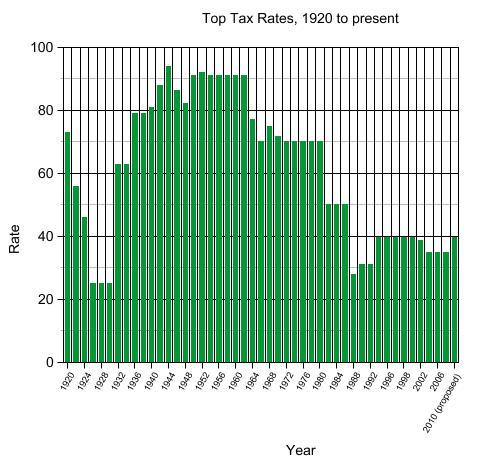
It is largely forgotten (or ignored) that capitalism was once saved by the economic policies, most often associated with the British economist John Maynard Keynes, that can be called nothing but socialism. The market could not always be relied on to produce equilibrium. The depression taught Keynes, and politicians like Franklin Roosevelt, Charles De Gaulle and Clement Atlee, that some measures would needed to be taken by the liberal state to address depressions. The interjection of the state into economics was not to inaugurate a socialist era, indeed it was to ensure the vitality of the capitalist system. In the 1950’s, under Republic President Dwight Eisenhower, taxes for the top bracket reached 90%. Americans paid lip service to the virtues of the free market but heavily depended upon government regulation, subsidies, price supports, and protectionism. These policies were not divisive, as Americans generally prospered during this time. The ‘American way of life’ was born in the generation following 1945 and the gap separating the rich and poor dramatically shrank in Europe, the UK and the US. In the US and much of the West, the market was viewed as unable to achieve collective ends. One mechanism for addressing this inadequacy was a progressive income tax that, through a moderate redistribution of wealth, would eliminate extremes between rich and poor for the benefit of society in general.

This was the success of social democracy. The United States flourished as a country, rising to global preeminence, largely due to the ideals of social democracy. As recently as the 1970s, it would have been unconscionable to allow the social services, welfare provisions, state-funded cultural and educational resources dissipate in the name of austerity or “freedom,” the abused concept of the modern Right. These public provisions were almost taken for granted by the post World War II generation. Judt attributes much of this paradigm shift to what he calls the “ironic legacy of the 60s.”

In the 1960s, the New Left emerged in a comfortable world with sense of political, economic and societal security. The New Left “took on a rather selfish air.” Focusing on maximizing individual freedom, the New Left ignored the collective purposes of the Left of yesteryear. Utterly ignoring the debt they owed the welfare states they were born into, the New Left’s radical individualism and the primacy it placed on private interests inadvertently merged with incipient Right. Keynes believed that an increased role for the state, including countercyclical economic intervention, was the best defense against both economic collapse and political extremism. The economists of the Austrian thought the exact opposite. The economists and philosophers of the Austrian school—notably Friedrich Hayek, Ludwig Von Mises, Joseph Schumpeter, Karl Popper and Peter Drucker-- extrapolated from the historical lessons of their own country. After a brief flirtation with socialism, Austria fell to a reactionary coup and then was invaded and occupied by the Nazis in 1938. For these men, this catastrophe had been brought on because of the Left. Socialist intervention into the economy, with its belief in historical laws and reliance on the reason of men, crippled the state and allowed it to be trampled by Fascism. Thus, the most efficacious way to protect the liberal state was to keep it out of economic life. Thus from the historical extrapolation of the Austrians, we have a school of thought that has in large part driven the ideology of political elites in the US. Judt retorts:
Thus when we recapitulate conventional clichés about free markets and western liberties, we are in effect echoing—like light from a fading star—a debate inspired and conducted seventy years ago by men born for the most part in the late 19th century (p. 102).
In the US, much less so than in the UK and Western Europe, the maxims of the Austrians have become dogma and allowed for any minor mention of state intervention to be vituperatively censured. The intellectual paradigm shift that has its roots in the Austrian school has engendered a lionization of the private sector, what Judt calls “the cult of privatization.” This cult of privatization and the concomitant derision and destruction aimed at the state has fundamentally undermined the public sector and public life in general. The evisceration of the public sector devolves society into segmented individuals. No longer is the welfare of all intrinsically connected. This myopic focus on the individual is disintegrating the very foundation of society, leading to world more and more like the Hobbesian state of nature.

The original cover of Biggie's first album

An ever-mindful historian, Judt recognizes the failures of socialism as much as capitalism. However, he wishes to disabuse the notion that capitalism is the “best” framework for organizing society or the most effective way to ensure freedom. What is freedom in a world where unregulated markets increase inequality and poverty and disintegrate society? The Right has been able to co-opt words like “freedom” and “liberty.” The working class and middle frequently vote against their own economic interests in order to “preserve their freedom.” Without being able to reclaim this lexicon the Left will continue to struggle to promulgate its message.

The question remains: Where does the Left go from here? Frankly, Judt asserts, we need to be vociferously perturbed by our present condition. This is certainly a start. The Left has become complacent as an important component, young people, has become apathetic and indolent. Blinded by consumer goods, many young people are nothing but zombies of a materialistic, self-indulgent, post-modern society, happy to float on with their iPads and vapid Twitter posts. Those of us on the Left need to stand up and resoundingly say that we do not want to live in a society where tax cuts for the rich have primacy over ensuring that all people have access to affordable healthcare and all children are given an education that gives them opportunities in life to succeed. If we are unwilling to demand a redress of these grievances we forfeit politics “and thereby abandon our society to its most mediocre and venal public servants.” We cannot rely on our elites to affect change. Look no further than the US Senate, full of political pygmies, concerned more with procedure, gossip and vacuity than legislating and addressing the challenges our country faces.

As noted above, Judt implores our society to reconsider its values. Perhaps we cannot quantify the sheer humiliation that one must experience when taking stigmatized “government handouts,” but that does not mean that it should not factor into our debate. By redistributing wealth, societies diminish social tension and provide more equal access to services once reserved for the few. This redistribution is certainly not theft and to suggest that those most advantaged by our society should not have to give back should induce a sense of moral vertigo. In the 19th century, Karl Marx believed the only way to address the inequities of capitalism was by revolution. The New Deal and the Great Society proved that we could preserve the market and find a medium between unfettered capitalism and state-controlled economies. As the successes of these enterprises have been dismantled piece by piece, poverty has risen. Concomitantly, we are experiencing the manifold pathologies of unequal societies—crime, violence, alcoholism and mental health problems have all risen dramatically.

Our values and the aims of public policy must make a tectonic shift from a myopic fixation on economic utility. Society and the state can and should be able to provide man with the necessary groundwork for a life well lived. The inability of the Left to articulate such a vision has resulted in the loss of a moral narrative. A new moral narrative, with an imperative emphasis on reducing societal inequality, is what social democrats need to craft and cultivate. While Americans on the Right continue to disparage the state, social democrats need to emphasis all the it does and the central role it has played in the rise of this country. Washington supported and subsidized American industry, from railroads to the steel industry, from the auto industry to farmers, much of America’s economic success is because of the state, not the mythical free market. Markets eventually have a self-distorting effect that only the state can save. It is simply clear that the market cannot solely provide for the collective interest, while we have seen that the mixed economies of social democrats provide a drastically superior model to promoting collective interests.

Judt believes we must get past the word “socialism” in our discourse. Its reference instantly conjures up images of Stalin and the Soviets and sullies the conversation. However, this is arguably part of the problem in our societies. The inability to recognize that socialism, in some forms, has existed in this country for decades and that it is capable of providing for the collective while preserving individual freedom is in large part due to the Left’s unwillingness to explain it. Elsewhere Judt has suggested that capitalism has not collapsed and will not. Yet, what happened in 2008? If it was not for state intervention we would have undoubtedly experienced a collapse of the economic system. Nonetheless, Judt understands that in the US, where opportunist politicians hurl invectives like “socialist” or “fascist” with alacrity, using these words renders the conversation obsolete.

There is hope for the Left and for social democracy and Judt is right when he says that we cannot yield to those who wish to dismantle its successes. The Left must conserve these gains. Moreover, people look to the state during times of great economic calamity. It was the Great Depression that made millions of Americans rely on the state in the 1930’s and 40’s. We are experiencing a time of great uncertainty with millions of Americans in debt, unemployed, and uninsured. Are we to believe that the market will provide solutions to these fundamental maladies of our society? In reality, it is the excesses and pathologies of unfettered capitalism that have caused these problems. In the closing pages of Ill Judt quotes Tolstoy: “there are no conditions of life to which man cannot get accustomed, especially if he sees them accepted by everyone around him.” We must ensure that our society and its people do not become acclimated to inequality. Judt recognized that we must conserve and build upon the successes of social democracy or our society will continue to crumble.

Adam Gallagher


Adam Gallagher is a doctoral student in political science at George Mason University.  Better Homes & Gardens magazine has described him as "philosophically overwhelming, the giant on whose shoulders Newton must have stood," while Gawker has called his work "as challenging as the cosmos itself... clearly the offal of an interconnected mind of meta brilliance."