Monday, June 27, 2011

Goats, Swords, & Fried Oreos: The Old 321 Flea Market as a Landscape of Globalization


The Old 321 Flea Market in Dallas, NC is now known as the I-85/321 Flea Market, even though it is even farther from Interstate 85 than it is from Highway 321.  The name change is most likely designed to lure the bargain hunters who seek out flea markets to come to the small town of Dallas by suggesting that the market is right off the interstate, when it is actually situated in a semi-rural stretch of town on the way to the even tinier hamlet of High Shoals.

But the name change also reflects the greater connection of Dallas and Gaston County in general to the broader world, as symbolized by the interstate that connects the area's mill villages to a more cosmopolitan circuit of commerce and culture from Atlanta to Raleigh, with the all the migration that the transportation infrastructure brings.  Gaston is part of the larger Charlotte-Concord-Rock Hill metropolitan statistical area with an estimated 2009 population of 1,745,524, a large increase of the 2000 census tally of 1,330,448.  Up until the 2008 financial crash, the economic prosperity of the greater Charlotte region brought not only migrants from dying industrial areas in the Northeast and Midwest but also a vast number of immigrants from beyond the borders of the United States.  Gastonia itself witnessed an 8.2% population growth rate between 2000 and 2010, and large numbers of new Latino, Asian, African and other migrants contributed to these totals.  

The Dallas flea market offers a fine indicator of the economic and demographic changes that have reshaped Gaston County over the last twenty years.  Home to trucking and bartering in all things cheap, defective, reused, copied, stolen, unregulated and possibly illegal, it offers a place for enterprising people to make something out of next to nothing, from bootleg CDs and bizarre household nicknacks to low-priced necessities for families struggling to stretch every dollar.  Its complexion has surely changed in the years since it was a dusty outpost of good old boys chatting and haggling in the Southeastern Sunday morning heat, and the material culture of the flea market -- Mexican wrestling masks and pinatas side by side with Confederate flags, 50 Cent remixes and Earnhardt encomia -- reveals how commerce can bring people of different origins and ideologies into the same space.  Indeed, it is one of the few spaces in Gaston County where people of different races, religions, and immigration status regularly come into contact with each other.

A Saturday Morning at the Flea Market


KY gel and a gonorrhea test -- everything you need to plan for a big weekend.


Many of our photos were taken from oblique angles.  People often do not like having their picture taken, of course, but the flea market brings with it many other issues of intrusion and anxiety where documentation is concerned.  Anyone with a camera who comes into another person's world may be an unwelcome intruder, and although I went to high school around the corner and have been coming to the flea market for years, I am still an outsider -- especially when I'm holding up my phone to take pictures.  Some shoppers and sellers at the market might have their own suspicions about who was taking pictures: undocumented immigrants, for example, might wonder if the INS or the local police were monitoring them, especially given the recent passage of bills in states such as Arizona and Georgia that gave local authorities the right to profile and harass immigrants.  At least one food seller instructed his employees not to let me take pictures of the food they were selling.  When I was asked why, the young woman said, "I just work here," although I imagine they might have been concerned about a visit from the Gaston County Health Department.  We also did not take many direct photos of the "Out of My Cold Dead Hands"-style gun dealers because they might think we were agents of Obama's oppressive regime and they are, of course, armed.
.


1990s R&B and 1970s punk are neighbors at the Inner Hippie Shop, one of the vendors that operates within several closed hangar/warehouse buildings at the market.  Other memorabilia includes framed photographs of classic jazz musicians, Bob Marley, and Dale Earnhardt -- an amalgam that strays over the boundaries of standard head-shop/counterculture fare.


Ismaili, a Turkish emigre, sells iPhone accessories.  Note his scowling colleague with the eye patch in the back.


We generally tried not to take pictures of people's faces when they could be targeted for any kind of prosecution for what they were selling (e.g. see photos of bootleg CDs and DVDs without the merchants).  It is no guarantee that a local cop or an RIAA/MPAA crusader will not randomly click on this blog and decide to "crack down" on these small sellers; indeed, in the IRB era, our project of documenting the flea market raises a lot of thorny issues.  Are we obligated not to take photos of this social arena for fear that somehow, someone there might be threatened as a result?  Is there any scholarly or journalistic imperative to create a record of this place and the people there?  Should we have to get permission from everyone whose photo we would take, and if so, what are the implications for photojournalism?  Should people only be depicted in the way they want to be depicted -- and not depicted at all if they say no?


Sandra's Simply Sinful Side Items, home of the fried Oreo, fried cheese danish and, of course, funnel cakes.


At the end of the morning we sample the legendary fried Oreos, drizzled with chocolate syrup and caramel.

.
The Flea Market as Historical Crossroads

It goes without saying that people have long associated trade and marketplaces as transnational spaces of interaction. In the pre modern and early modern world, Timbuktoo, Baghdad, London, and what was then Constantinople and today Istanbul, provide only a few spaces of this economic cosmopolitanism. Adam Smith saw civilization in free markets and capitalism’s invisible hand. The Islamic religious prophet Muhammad was a trader. Any high school history teacher worth his or her salt will tell you that trade is one of the main forms of cultural diffusion, enhancing the spread of language, religions, ideas, and products. These seem to be obvious facts.


So perhaps it should come as no surprise when Professor Cummings points to the Dallas, NC flea market as an amalgamation of transnational kitch. The professor’s points about immigration are well taken. A 2004 Economist article pointed out the increasingly suburbanized nature of immigration. For example, as of 2000, more immigrants resided in suburbs than cities and the numbers continued to rise. Furthermore, this suburbanized migration proved as true in New York and Chicago as it did in newer sites like Las Vegas, Washington D.C., and yes, Raleigh Durham. It happens fastest in the new “emerging gateways” of Dallas, TX and Professor Cummings’s southern jewel, Atlanta (Economist, “Immigration into the Suburbs”, March 11, 2004).


Cities like Chicago have long exhibited this sort of travel vista via marketplaces. For example, Maxwell Street market in Chicago began on Chicago’s west side over 120 years ago. The flea market, located on predictably, Maxwell Street, stretched from 16th Street all the way to Halsted Avenue. Forced to move in 1994 by a larger more moneyed transnational institution, the University of Illinois Chicago, the market landed on Canal Street in 1994 staying there until 2008 when it was forced by area businesses to relocate to the River North area along Desplaines Street between Roosevelt Road and Harrison Street. As one vendor admitted, “Flea markets such as Maxwell Street don't fit the changing image of the area.” Though it has long been heralded as multicultural space, who predominated usually developed accordance with migration to the city. What began with Russian Jews gave way to Poles who then receeded as African American migrants from the South became a dominant presence to today, where Mexican immigrants define the market. In fact as a Chicago chef Rick Bayless pointed out on a recent episode of the Travel Channel’s Bizarre Foods, Chicago has become the artisanal tortilla capital of the world. Moreover, some traditional Mexican cooking is more available in the city of Big Shoulders due to the wider availability of ingredients, which partially reflects the Midwestern agricultural hinterland that supports the metropolitan area. As with any change, some viewed the market’s current configuration with a sense of loss, "I miss the hot dog stands and the smell of onions," noted on longtime customer. "And pork chop sandwiches. Some of that comes with the changes in ethnicity. Today, you have a lot of taco stands."


Still, one should always remember the multi directional nature of these kind of spaces even when located in “semi-rural” or suburban locals. Mike Davis explores these locations in his work on Latino immigrants in America. In Magical Urbanism, Davis notes the more traditional insights in this regard such as whole “transnational communities” residing in one city block in L.A. but also draws attention to the place transnational suburbs have come to occupy for Latino immigrants. Remittances from work fuel rural development in Mexico, while creating a transnational flow of capital and people to these burgeoning suburban/metropolitan communities. “More than ever, repatriated “migradollars” (an estimated $8 billion to $10 billion annually during the 1990s) are a principal resource for rural communities throughout Mexico and Central America. Surpassing sugar and coffee, they are now the largest source of foreign exchanged in the Dominican and Salvadorean economies.” (Davis, 80) Global restructuring forces traditional communities to juggle capital and people between “two different, place rooted existences.” (80) Davis describes these connections between places like Dallas, NC and Puebla, Mexico as “economic and cultural umbilical cords.” (80) In this way, the “sending communities” serve as “transnational suburbs” distant from places like Atlanta, New York, or Miami, but as “fully integrated inot the economy of the immigrant metropolis as their own nation-state.” (80)


The power of these places is not confined to economics. Mexican politicians have been known to purchase media advertisements in American urban areas enticing Mexican nationals to vote from their homes in metropolitan areas of San Diego, Chicago, New York, and elsewhere. When the Dominican Republic’s dictatorial president Joaquin Balaguer exiled leading Dominican dissidents to New York, the Big Apple became the “main base for the country’s oppositional politics.” When political reforms relaxed the once authoritarian government’s grip on the nation, New York remained “the second home for the republic’s turbulent political life.” Davis notes it probably should then be no surprise that when Leonel Fernandez Reyna, who grew up on New York’s upper west side, won the nation’s 2004 presidency. Reyna still held a green card and fully expected to split his time between Manhattan and the D.R making Reyna perhaps the first transnational migrant ever elected to such an office. (84)
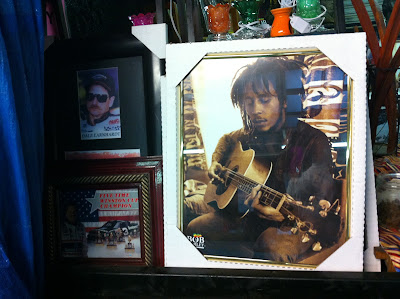

Still, if one believes the Economist, the Sunbelt is the future of immigration. After all, sprawl, a defining trait of many Sunbelt metropolitan areas, attracts immigrants. “Now, as sprawl consumes an ever-widening swathe of cornfields and meadows, immigrants are close behind," the Economist declares. "Who else will cut the grass, clean the houses or flip the burgers of suburbanites?” However, as has been seen in Queens, NY and elsewhere, immigrants can also generate what Saskia Sassen has called “low level gentrification.” Immigrant purchases and home starts in the greatest borough of New York spurred development. This points to the bifurcated nature of today’s immigration where on the one hand you have English speaking college educated legal immigrants and non-English speaking, poorly educated, and largely unskilled undocumented migrants: “Indian doctors and engineers represent the first group, Mexican day-labourers the second.” Granted, it is unlikely the Dallas flea market serves as a site for the H-1 Visa set, but as Leonel Fernandez Reyna illustrates, that vendor you bought the velvet Bob Marley picture from just might the next President of somewhere.

Tuesday, June 21, 2011

MLK Ain't No Al Capone: Even Sunny CA Has a Dark Side


Often when people think of racism and segregation they look South. Ask anyone of southern extraction attending a northern university how often they are subject to comments about racial discrimination and the like, they are likely to roll their eyes and ask how much time you have. One friend of mine, a South Carolina native and Macalester grad, often recounts the numerous remarks he endured while attending the St. Paul, Minnesota university. As he often noted, it's kind of easy to claim openminded nondiscriminatory beliefs when your state remains predominantly white and yes, Nordic. T of M fave Lisa McGirr has mapped the rise of the new right in Southern California while gadfly Mike Davis has traced the region's racial tics in Magical Urbanism and City of Quartz. In Magic Lands, John Findlay explores the influence of Disneyland, through its exportation of its racialized suburban built environment, in contributing to the nations's white normativity. Eric Avila has shown us how popular culture emphasized L.A.'s surburban urbanism, notably its glorification of white middle class domesticity. Moreover, Charlotte Brooks' excellent Alien Neighbors, Foreign Friends traces the place of Asian Americans in segregated California of the 20th century.

What these handful of works reveal is a shifting "othering." If Asian Americans and Mexicans served as the primary threat to white Southern California normativity in the first half of the century, Blacks replaced them in the post war period. As more and more African Americans took advantage of burgeoning industrial work in the West, white Californians came to their accept their Asian American neighbors as the lesser of two evils. Additionally, Brooks argues, Cold War influences led many to justify their inclusion of Asian Americans as a tactical decision meant to exhibit American openmindedness to the broader world -- winning hearts and minds in communist threatened Asia, if you will. True, today one is more likely to point to Arizona for fresh evidence of racism, but if one desired evidence of a calcified SoCal racism one need look no further than the place of Mexicans and Mexican Americans. The aforementioned Mike Davis has illustrated the continuing racial overtones plaguing Anglo-Mexican/Mexican American relations.

Clearly, Southern California discrimination as elsewhere hinges on demographics and proximity. Shifting discriminatory winds react to both factors. If the Chinese and Japanese were demonized in the first half of the century, while not lionized in its second half, they emerged with greater socioeconomic strength than did their counterparts. Today, California continues to illustrate such shifting tides. A recent report by William Frey revealed that California's youth is distinctly not white. Statewide only 27% of its children are white while 51% and 6% identified as Latino and Black respectively. This left the remaining 16% to be divided between Asian and Middle Eastern populations. Still, while this diversity appears encouraging, it fails to obscure a Southern California history that remains awash in racial social imaginaries. While suburbanization rates nationally for Latinos and Asians have improved, Blacks continue to endure greater barriers in their efforts to suburbanize. This is not to say Blacks are absent from suburbia. Andrew Wiese and Mary Patillo McCoy have pushed back against this idea. Indeed, Blacks have long been a presence in the suburbs, even if in smaller numbers. One wonders why the same avenues to suburbanization have not reached Blacks at the same level as other minorities.

While numerous reasons can be marshaled to explain this inequality, one simple answer is the residual racist thought that continues to connect blackness to inferiority. The Sunbelt has not proven itself to be any more colorblind than other regions. If one remembers correctly, Arizona would never have officially declared Martin Luther King Jr. Day a holiday had it not been for the NFL yanking the 1993 Super Bowl from the state. In response, Arizona, ironically, became the only state to popularly vote for the holiday and put it into legislation. With that said, one should remember that MLK Day only became official in 1986 and even then only 26 states observed it. The letter below to local Southern California news paper the Star News illuminates the kind of racial discourse we have normally associated with the segregated South. I don't know James Matherly, but I am from Chicago. Al Capone Day sounds terrible (especially for Geraldo Rivera), but to compare the former gangster to MLK makes even this Chicagoan cringe. So the next time you see one of those smarmy "come to California" commercials, just remember, Californians are as fucked up as the rest of us.

The Star News (local newspaper for the South Bay San Diego metropolitan region)
Feb 5, 1985

He’s outraged by King holiday

The student essay on Dr. Martin L. King seems divorced, separated, estranged form the truth of what King said and did.

I spoke before the San Diego Board of Supervisors Jan. 3 and before the Metropolitan Transit Development Board Jan. 12 in opposition to any King holiday.

As I recall, not one member of the public spoke in favor of this holiday at either meeting. A King holiday is an insult for those who served in the military forces. A King holiday is an insult to the memory of Harry S. Truman, an insult to the memory of Franklin D. Roosevelt, an insult to the memory of Dwight D. Eisenhower. These men and others did much more for the entire American people.

The life of King cannot stand honest, searching inquiry. The idea of hiding FBI documents, tapes, papers on King for a number of years cheapens the idea of a King holiday. The idea of a King holiday is as morally fraudulent, intellectually fraudulent as a funny holiday for someone called Al Capone.

James Matherly
402 Oaklawn Ave, Apt. G
Chula Vista

Thursday, June 16, 2011

Stop Me If You've Heard This One Before: Tea Parties, Filibusters, and More in the 1970s

 
Historians like almost nothing better than to find precedents in the past for supposedly new things.  "X is nothing new" is a formulation that is likely to be heard in a graduate seminar, an AHA panel, or anytime anyone makes the mistake of suggesting something is genuinely novel.  (This is partly why history dissertations almost always end up going further into the past than their authors originally intend.)  It is an annoying professional tic, but there is a degree of truth to Solomon's old axiom that "there is no new thing under the sun."  Even dismissing the newness of things, it seems, is as old as the hills.

Recently I flipped through some primary sources I had collected about piracy in the 1970s, and one news clipping after another seemed eerily familiar.  All came from North Carolina newspapers such as the Raleigh News and Observer, Greensboro Daily News, and Charlotte Post, and most were published in 1978.  The prevalence of tape piracy, of course, is important for my own project, which aims to show how people wrestled with questions of copying culture long before Napster and Limewire came along.  But there are many other similarities.  For instance, Republicans have lately tried to tar President Barack Obama with the brush of Jimmy Carter's failed presidency, comparing today's economic doldrums to the crisis of the 1970s; whether that charge sticks or not, there is an undeniable correlation between today's news and the topics and themes discussed in these newspapers (taxes, unemployment, an angry middle class) that should worry any current officeholder.  Indeed, the similarities go much deeper than a mere recession.  Here are a few that you are bound to recognize:

The Age Old Agony of the Academic Job Market


As early as 1971, people began to worry that there were more people with doctorates flooding the market than there were academic jobs for them to fill.  Looks like academia has been waiting for the boomers to retire ever since they first started on the job.

Women of the Tea Party


Not long after Sarah Palin first "killed her a bar when she was only 3," American women began to rise up against the tyrannical hand of the IRS.  Their leader was Vivien Kellems of New Haven, Connecticut; at the age of 74, the AP referred to her as "Miss Kellems" but reminded readers that she was "still a lady."  One newspaper called her a "self-liberated woman," but Kellems disdained feminists for "invading" bars and "men's restaurants" when they should really "be concentrating on electing women to public office and shooting for a woman president."  The IRS sued Kellems for unpaid taxes the previous year, and she vowed to lead a "national Boston Tea Party" against the unequal taxation of single people like herself.

Kellems was a wealthy industrialist, an individualist, and a supporter of the Equal Rights Amendment.  Her case symbolizes the tangled politics of resistance in the early 1970s, when the emerging "tax revolt" was not yet an entirely conservative affair and rhetoric invoking the Boston Tea Party could be employed by an independent businesswoman in her 70s to fight for what she saw as equal treatment under the law.  (Sociologist Isaac Martin has explored how the early tax revolt shared both liberal and conservative support in his book The Permanent Tax Revolt, and we have previously written about early uses of Tea Party language here.)

The Filibuster Thwarts Progressive Agenda
.

Long-time civil rights leader Bayard Rustin writes in this piece for the Post, the newspaper of Charlotte's African American community, about how a conservative minority was able to stymie progressive policies by invoking the filibuster, despite the fact that Democrats controlled the White House and both houses of Congress.  Sound familiar?

Class Warfare on the Right


Class warfare, as conservatives never tire of reminding us, is unAmerican when practiced by the Left, but it is just dandy when the Mama Grizzlies want to wield their pitchforks and assault rifles against pointy-headed cultural elites.  Kevin Phillips helped usher in the political ascendancy of Richard Nixon and Ronald Reagan in the late 1960s with his book The Emerging Republican Majority, but he was honest enough to admit the utility of class resentment for conservatives in this column.  "Analysts who suggest that the politics of class conflict must necessarily come from the socialist Left could be missing a new and intriguing trend," Phillips noted, described a "middle-income, class-conscious politics."  He cited the work of sociologists Richard Coleman and Lee Rainwater, who argued that "as US citizens can no longer take economic growth for granted, not only will belief in social mobility erode but also many people will begin to fear an absolute loss in social and economic status.  Voters will then embrace class politics as a tool of keeping one's self and one's group afloat."  Phillips's words seem especially prescient when he observes, writing in 1978, that "if the United States drifts into economic turmoil and eroding prosperity, then a politics of anti-elite resentment could conceivably be a powerful one.  The next three or four years should tell the tale."  

Tell the tale, they did.  Carter was out and Reagan was in two years later.  With today's meandering economic policy and chronically high unemployment, what are the odds that the resentment behind the current Tea Party movement will grow stronger in the years to come?  Its supporters may direct their anger at both the lazy, parasitic poor and the sybaritic elite, as Reagan so successfully did with his rhetoric of "welfare queens" and "limousine liberals." They may rail against government handouts and corruption even as they cling to whatever scraps of prosperity they have left.  (Hence the seeming paradox of opposing government spending and socialism while shouting "Hands off my Medicare!")  Let's hope this is not the outcome.

Austerity Is Always the Answer


This op-ed by Joseph Califano, a former close aide to LBJ and then-Secretary of Health, Education, and Welfare under Carter, does not give much cause for comfort.  The Democratic policymaker looks wistfully back at the 1960s as a time when liberals could wield the growing prosperity of American society to pursue ambitious initiatives to benefit children, the elderly and the poor.  The late 1970s, he suggested, were a time of limits, and liberals had to confine themselves to showing a skeptical public that government could actually be efficient and do its job well.  The fundamental premise of government services seemed to be under attack, and Califano's answer was one we have been hearing a lot about lately -- cutting spending in the name of efficiency and austerity.  Reading through the Secretary's proposals, one gets the sense that liberals had run out of ideas and had no real solutions to address the country's economic crisis.  One also gets the impression that the Obama Administration has given up on trying to pass any initiatives to fix the economy and hopes to just ride it out through the next election.  We saw how well that worked for Carter.

Best Days Behind Us?

Of course, not everyone gets unknowingly swept along in the currents of history, whether in the 1970s or today.  The following cartoon appeared, ironically enough, right next to Califano's op-ed.  In it, the Lumpits weigh in on the misguided nostalgia of American culture in the era of American Graffiti and the Fonz.


Before we come down with a bad case of nostalgia and flip on That 70's Show, we might do well to look at the history and learn from another era of filibusters, tea parties, and too many PhDs.  We might just manage to avoid repeating some of the mistakes of the past.

Alex Sayf Cummings

Monday, June 13, 2011

Scattershot Politics: Sport and Its Serpentine Political Meanings


Over the past fifteen to twenty years, historians have increasingly emphasized the role of sports as both a driver and reflection of society. The recent Bill Simmons inspired and ESPN produced 30 for 30 documentary series tackled a number of difficult subjects via Sport. In "The Two Escobars," directors Jeff and Michael Zimbalist traveled through 1980s Columbia, following the lives of Pablo (international drug dealer/murder/local philanthropist) and Andres Escobar (captain of Columbia’s 1994 World Cup team murdered in a nightclub alteration several months later). The two unrelated protagonists encapsulated the travails of late 20th century Columbia. Drug money filtered into the nation’s soccer infrastructure, boosting its competitive success but also adding layers of complexity and violence to a nation already struggling with decades of conflict. Writing for the Onion’s AV Club, Todd VanDerWerff summarized its importance similarly: “The film's portrayal of Colombia as a nation that made its compromises and learned to live with the hell they unleashed is also particularly good, as the story of the two men at the center slowly radiates outward to encompass more and more of the nation's society.”

This is not a wholly unusual conclusion for the series. In “Pony Exce$$,” director Thaddeus Matula explored the corruption and ultimate destruction of Southern Methodist University’s (SMU) then dominant football program as booster money flowed in from the oil wealth that defined the Southwest US in the 1980s. Though the Southwestern Conference consisted of eight schools (Baylor, Rice, SMU, Texas, Texas Tech, Texas A&M, Arkansas, and Texas Christian University), Dallas served as a hub for numerous successful graduates of each school. As several observers note in the documentary, football rivalries crackled in the board room meetings of Dallas high rises as alumni from all schools engaged in recruiting practices that seemed to define the decade.

Likewise, Billy Corben’s film, “The U” about the dominance and bravado of Miami University’s 1980s football teams reflects similar themes. Miami’s football team served to unite a divided city behind a collection of local talent that also rewrote the rules of the game. Miami’s players excelled spectacularly on the field but stoked controversy with their trash talk and exuberance. If oil money shaped SMU, Miami’s notoriously tough African American neighborhoods, embraced by Miami’s first successful coach Howard Schnellenberger, came to symbolize “The U’s” power. Along with cultural productions like Scarface, Miami Vice and the notorious Two Live Crew, players like Michael Irvin challenged college football and its fans. Unlike “Pony Exce$$”, “The U” reveals the racial undertones that marked some of the criticism faced by the Miami program. When teamed with Steve James’ masterful “No Crossover: The Trial of Allen Iverson” and the recent “Fab Five” film about the innovative early 1990s Michigan basketball team, “The U” reveals so much more about American life than just college football. Race, money, and a changing cultural landscape collided. As one writer observed, James’ movie looks at Allen Iverson “more as a phenomenon, a human inkblot whose polarizing effect on people often says more about them than it does about him. They see whatever they want to see, and that may or may not be the truth.” In essence, all these films and others in the 30 for 30 series function to elevate sports to a level of political and social importance that might have been derided in early decades.
Architecture is the simplest means of articulating time and pace of modulating reality and engendering dreams. It is a matter of not only of plastic articulation and modulation expressing an ephemeral beauty, but of a modulation of producing influences in accordance with the eternal spectrum of human desires and the progress in fulfilling them. The architecture of tomorrow will be a means of modifying present conceptions of time and pace. It will be both a means of knowledge and a means of action.
- Ivan Chtcheglov, Formulary for a New Urbanism, 1953

Writing in 1953, nineteen year old architect and devotee of the Situationist movement Ivan Chtcheglov published his sweeping indictment of mid-century urban planning. For Chtcheglov, the architecture of cities past reflected the dead life of capitalist production. City dwellers had been hypnotized by the built environment, thus, focusing exclusively on capitalist accumulation to the extent that when “presented with the alternative of love or a garbage disposal unit, young people of all countries have chosen the garbage disposal.” One can see parallels with sport, most clearly in the above examples regarding SMU and the Escobars. The excess capital of drug and oil money created a vehicle for the egos and dreams of ruling classes that were then imposed. (To be fair, soccer teams as several interviewees in The Two Escobar note, serve as great money laundering devices. One might suggest the same of Enron and other corporate entities in recent years.)


For Americans, sports provided both meaningless entertainment and incredible important cultural moments of resistance. Dave Zirin documents athlete resistance of the twentieth century in his 2005 work, What’s My Name, Fool? Sports and Resistance in the United States. To Zirin’s credit, What’s My Name, Fool? gathers countless examples of political acts by athletes across the sports spectrum, engaging in issues of race, gender, and class. For example, Zirin traces the complicated politics of Jackie Robinson who, despite his bravery in desegregating MLB, came to be unfairly seen by radical Black nationalists of the late 1960s as a sell out. Some have described Zirin as sort of Howard Zinn of spors journalism. Perhaps. He does look at major historical events like the 1968 Mexico City Olympic protest by Tommy Smith and John Carlos, in which both athletes upheld closed black gloved fists. Zirin explores many facets of the event that had gone unnoticed. Unfortunately, while Zirin collects valuable stories worth reflection, he too often veers in the direction of soap box oratory. Moreover, Zirin seems to feel the need to conclude paragraphs with zingers. For example, how about this gem regarding the failure of several WNBA sports franchises: “while some franchises found success, others have folded faster than a rib joint in Tel Aviv.” (186) When discussing Allen Iverson, Zirin notes Iverson’s role as an anti-corporate anti-hero summarizing his nickname may have been A.I. but “there was nothing artificial about him.” (163) Nuance is not the most prominent feature of What’s My Name, Fool. Still, even if the equivalent of street corner radical, Zirin contributes something to our knowledge of American culture and sport.

If baseball and to a lesser extent American football and basketball have served as venues for political expression, predictably, football occupies a similar position for Europeans. How Soccer Explains the World: An Unlikely Theory of Globalization, Franklin Foer traipses through countries around the world, but predominantly Europe, exploring the meanings and processes that manifest themselves in the sport. Throughout How Soccer Explains the World one thing becomes clear, the political complexity of football and more generally, sport, radiates in countless directions. When Foer presents Barcelona’s “bourgeois nationalism” as a model for 21st century cosmopolitanism, he goes so far as to claim that it “redeems the concept of nationalism.” (198) For Foer, Barca never demonizes opponents the way supporters at Red Star (Belgrade- the subject of a previous chapter, one that found soccer fan bases and clubs of the former Yugoslavia as germs for the paramilitary organizations of the Balkan wars in the 1990s) have. Instead, Barca illustrates that “fans can love a club and a country with passion and without turning into a thug or terrorist.” (197)


A central aspect of Barca’s identity rests on its foundational myth, its role as a means of Catalan resistance toward the post Spanish Civil War fascist Franco regime. According to this myth, Camp Nou, Barca’s legendary stadium, enabled Catalan fans to express themselves in ways forbidden by Franco. Camp Nou allowed for political and social subversiveness. “Its fans like to brag that their stadium gave them a space to vent their outrage against the regime,” writes Foer. “Emboldened by 100,000 people chanting in unison, safety in numbers, fans seized the opportunity to scream things that could never be said, even furtively, on the street or in the café.” (204) Yet, as Foer acknowledges, there is another way to view Barca’s history. More likely, Franco saw Camp Nou and Barca as harmless outlets for his repressed populations. Unlike the Basque region and its terrorist/separatist movement ETA, Catalonia never developed any similar liberation fronts. Instead, Catalans pragmatically went to work, benefitting from subsidies and tariffs that contributed to Barcelona’s metropolitan industrial boom. This success may go far in explaining Barca’s place in the Catalonian psyche. Foer argues, many Catalonians have a self conscious suspicion, that unlike their forefathers and other Spanish regions, “they feel as if they have lived lives devoid of struggle and without epic dimension. They worry that their fathers would be disappointed with their staid existence.” (214) Catalans employ Barca as a “balm” for a guilty conscience and resentments over “Castilian centralism.” Even in this less than ideal motivation, Foer finds strength. Catalans hold contempt for a concept ("Castilian centralism,” as represented by arch rival Real Madrid) rather than a people, hence the reason Barca lacks the kind of history of hooliganism or violence that seems so prevalent at other clubs. If anything, the history, identity, and place of the Barca (this year’s Champion’s League victor) in Spain points to a deep complexity that lay at the heart of sport in the West. However, one needs to ask, what does sport mean outside the West?

Decolonizing Cricket

It is no exaggeration to suggest that cricket came closer than any other public form to distilling, constituting and communicating the values of the Victorian upper classes in England to English gentlemen as part of their embodied practices and to others as a means for apprehending the class codes of the period. 

“Rock star” anthropologist (probably the equivalent of “rock star” bands like the Soft Pack—what never heard of them? Exactly) Arjun Appadurai also believes sport reveals deeper issues than won loss records. In Modernity at Large: Cultural Dimensions of Globalization, Arjun devotes an entire chapter to the “decolonization of Indian cricket.” Appadurai’s interest lay in what he labels the “indigenization” of cricket on the subcontinent. The former University of Chicago anthropologist (he's currently at NYU) identifies four processes that interacted in ways that led to cricket’s unique indigenization in India:

  1. the “implicitly corrosive” affect the “elite Victorian values” embedded into the sport on the “bonds of empire”
  2. internal sustainability of the cricket due to its ability to develop talent outside urban
  3. issues of post colonial masculinity in which spectating came to be associated with “bodily competition and virile nationalism”
  4. the ability of media and language to disconnect Englishness from the sport

Perhaps the most intriguing of Appadurai’s processes is the paradoxical affect that the initial values of the sport exerted. “Quintessentially, masculine,” the codes of cricket regulated broader male behavior. These codes consisted of four essential tenets: 1) sportsmanship 2) fair play 3) emotional control over one’s person 4) loyalty to team and sublimation of personal interests to the group. Yes, it functioned to socialize and discipline subjects, but it also provided an “an instrument of elite formation.” As Appadurai points out, “it both confirmed and created sporting solidarities that transcended class.” (92) The field allowed lower and middle class competitors a limited equality with their Victorian superiors. Appadurai also credits the lower classes with doing “the dirty subaltern work of winning so that their class superiors could preserve the illusion of gentlemanly non competitive sport.” (92) The greater importance, he argues, is that as an elite sport, cricket nonetheless emphasized an idea of fair play that demanded “openness to talent and vocation in those of humble origins … a key to the early history of cricket in India.” (92) English officials believed it to be the perfect way to “socialize natives into new modes of intergroup conduct and new standards of public behavior.” (93)


With that said, one of the most critical developments unfolded as Indian princes began paying English and Australian professional players to train their own squads in India. This line of patronage and the coaching it brought with it proved critical to the sport’s development. Princes loved cricket because it confirmed their own masculinity, provided avenues for furthering their English contacts, and enabled them to extend their places in “royal public spectacles” seen as integral to the intrigue and responsibilities of Indian royalty. This resulted in a class of players form outside India’s major colonial cities. The monies given to them by these Princes allowed for many to occupy a space in the cosmopolitan world of cricket. As these new class configurations compiled, Indian cricket exhibited a class complexity that Appadurai argues “persists to today.” (95) “In the circulation of princes, coaches, viceroys, college principals, and players of humble origin between India, England, and Australia,” writes Appadurai, “a complex imperial class regime was formed.” Functioning as a sort of network of Indian and English “social hierarchies”, by the 1930s the various interactions occurring within this nexus of empire had created a “cadre” of non elite Indians who identified as both legitimate cricketeers and “genuinely Indian.” (96)

Unlike in England, where cricketing organization represented territory and nationhood, Indian organization refracted this meaning instead focusing on community and cultural distinctiveness. This meant Indian clubs were organized around local religious identities. Thus, spectators and players developed distinct ideas about their identities as Hindus, Muslims, and Parsi through the public spaces of cricket. When contests between English sides and those of indigenous colonial players expanded, the idea of India had to be invented. In other words, in order to field a team to play British sides, there existed a need to construct a team that represented Britain’s South Asian possession, India. At the very least, the teams constructed embodied protonational visions of an Indian state. In the post 1948 world, cricket as a vehicle for Indian nationalism seems obvious. Moreover it ties the tangled ends of empire together servings as a space for Indians, Pakistanis, Australians, English, their respective Anglo colonial counterparts, to engage and interact. While Appadurai also notes what he sees as the negative influence of globalized financial flows and commodization, he nonetheless recognizes its powerful undercurrents. “[Cricket] is an agnostic reality, in which a variety of pathologies (and dreams) are played out on the landscape of common colonial heritage. No more an instrument for socializing black and brown men into public etiquette of empire, it is now an instrument for mobilizing national sentiment in the service of transnational spectacles and commoditization.” (109)

Operation Iraqi Freedom

"Iraq as a team does not want Mr. Bush to use us for the presidential campaign," [Iraqi midfielder Salih] Sadir told SI.com through a translator, speaking calmly and directly. "He can find another way to advertise himself."
-- Grant Wahl, Sports Illustrated, “Unwilling Participants” August 4, 2004

Appadurai’s exploration of cricket through the tentacles of imperialism points to the multivalent nature of sport. Though employed as a means to inculcate imperial pride and English Victorian values, cricket served to sculpt communal identities while contributing to post colonial imaginaries that envisioned an independent subcontinent. With the rise of an increasingly globalized mass media, cricket provided the state with cost free way of emphasizing nationalist tropes to a transnational diaspora.

While American occupation of Iraq differs in many ways from the English equivalent a near century before, many Iraqis view it as neocolonialism. Take, for example, George W. Bush’s attempt to appropriate the newly reconstituted Iraqi soccer team for electoral gain. Linking the team’s achievements at the 2004 Olympics (they ultimately took fourth, a remarkable achievement for a nation at war) with those of his administration, Bush attempted to use it as evidence of his administration’s efficacy. On the eve of the 2004 election, in speeches and ads, Bush lauded the fact that had the US not intervened, Iraq would not have fielded such a successful team. “It wouldn't have been free if the United States had not acted." While all players acknowledged that none wanted a return to the days when Uday Hussein tortured Iraqi athletes, neither did they appreciate Bush’s line of logic. Coach Adnan Hamad summed up the general tenor of the team’s opposition: “My problems are not with the American people . . . They are with what America has done in Iraq: destroy everything. The American army has killed so many people in Iraq. What is freedom when I go to the [national] stadium and there are shootings on the road?" Of course, the attempt by an American president to take credit for Iraq’s soccer exploits is ironic for several reasons. Unfortunately for Iraqi players, more than a few observers will conclude American intervention did improve their team’s chances. After all, its fourth place finish remains its highest Olympic finish in soccer. In this way, soccer performs a contradictory function to at once provide a unifying expression of Iraqi identity, one couched in resistance to US prerogatives, while also serving as measure of justification for the very occupation they resent.

Iranian Revolution


Perhaps few places in the world today represent the political power of sport more than Iran. Again, this power flows simultaneously in two directions. Two recent events help convey the duality of soccer. The recent death of Iranian goalkeeper Nasser Hejazi underscores its disruptive effect on the Persian nation’s coercive government. Known as the Eagle of Asia, by most accounts, Hejazi was considered the greatest Iranian goalkeeper in history. Yet, the regime refused to celebrate him, nor did he celebrate it. Banned from national competition due to an arbitrary age limitation placed on the national team by the newly triumphant regime in 1979, Hejazi remained a thorn in the government’s side from then on. In 2004, Hejazi attempted to run for office but was denied by authorities. He later commented on the Iranian government’s failed promises. “I am agonised,” he said, “to see [the authorities] interpret poverty as contentment, inefficiency as patience and, with a smile on their faces, they call this very stupidity wisdom.” (Economist, June 2, 2011) The remark earned him a temporary ban from Iranian television. Even in death, the Iranian government remained fearful. The first half of his funeral drew over 20,000 mourners. As the Economist noted, the chanting of anti-government slogans pervaded the event and authorities quickly whisked the body away to a secret burial where contrary to tradition, no prayers were uttered.

Hejazi complicated football for Iranian rulers. The government had hoped to use the Iranian national team for its own purposes. The 1998 World Cup victory over America provided one such opportunity. However, an unexpected victory over Australia the year before sparked controversy within the regime as Iranians bounded into the streets in celebration. Of course, this being Iran, gender comingling remains distinctly discouraged. One particular English periodical commented sarcastically: “In their delight, men and women surged onto the streets of Iran’s cities and—O tempora! O mores!—celebrated together uninhibitedly.” When the Iranian team lost to Bahrain in 2001, the team played lethargically or as some argued “inertly.” Many Iranians suspected the team had been bribed or threatened by the powers that be. Hejazi had long advocated women attending games with men, and the fact that women attended his funeral was seen as an indictment of official policy.

Clearly, football represents a risky proposition for rulers. Speaking to NPR, Middle Eastern soccer expert James Dorsey noted the careful balancing act that some governments experience via sport. According to Dorsey, Middle Eastern football remains a “battlefield in which governments - certainly authoritarian governments - try to keep tight control of the game because the pitch is potentially, and often is, a venue for expression of dissent.” Recent events in Egypt, where soccer fans have disrupted games to make political statements, illustrate that Dorsey’s reflections ring true outside of Iran as well.

Nonetheless, Iran’s government continues to use football as a means for its own ends. FIFA’s ban on the Iranian women’s team for refusing to stop wearing the hijab has given the regime a talking point about western corruption and bias. Iran's President Mahmoud Ahmadinejad called FIFA "dictators who just wear the gown of democracy." Granted considering FIFA’s current state (corruption scandals abound with prominent periodicals like the Economist labeling the organization “rotten” and “awful”), any ruling by football’s governing body appears suspect. However, consider the fact that Iran continues to ban women from attending games and demands that its team wear a hijab and long pants. FIFA had been holding talks with officials to work out a compromise when a Bahrain FIFA official refused to allow the Iranian women’s team to take the field against Jordan. Of course, the New York Times noted that Bahrain’s own religious make up consists of a Shiite majority ruled by a Sunni minority. Sporting politics can tumble into transnational spaces. As for Iran, the Economist obituary frames the temptation of football succinctly: “Thanks in part to Mr Hejazi, Iran’s regime knows that the circus of the football stadium holds as many hazards as rewards.” Bread and circus are everywhere, but in some places, maybe they mean just that much more.

Ryan Reft

Thursday, June 9, 2011

SoCal Classic: Early Conservative Opposition to Public Housing


One of the “magical” things about California is the sheer diversity of people and opinions that abound throughout the state. Even its most conservative bastions, like San Diego, have pockets of liberalism. Despite a throbbing right-wing heart beat, San Diego has a vibrant and prominent gay community. With that said, Southern California’s brand of conservatism puts others to shame. Equal parts John Birch Society fever dream and Barry Goldwater eroticism, mid twentieth century Orange County conservatism staunchly opposed liberal corruption and creeping socialist influence, instead promoting free market policies and New Right rhetoric that embraced technological innovation but privileged traditional domesticities. Lisa McGirr’s now landmark Suburban Warriors: The Origins of the New American Right captures the mid-century SoCal conservatives at the height of their inner Goldwater. 

That’s not to say LA and San Diego didn’t have their own pitchfork wielding right wingers. Published in 1953, The Rose Hills Report: A Case Study of Public Housing declared its own conservative vision. A joint effort of the Monterey Woods Improvement, Montecito Hills Improvement, and the Huntington Villa Property Owners Associations, the report announced from the outset that “Eternal Vigilance is the Price of Freedom.” Duh. You can imagine where it goes from there. There’s aggrieved property owners, creeping socialism (and “his brother Communism”), “totalitarian” bureaucrats, and, yes, taxes. Certainly, if one is to believe neo noir classics like Denzel Washington’s Devil in a Blue Dress or the Russell Crowe-Guy Pearce vehicle LA Confidential, mid-century Los Angeles oozed sexual intrigue, corruption, and vice. The Rose Hills Report doesn’t quite reach such levels of fictive genius but its authors are definitely writing fiction. 

To read the full report, click here.

Monday, June 6, 2011

Seven Ways of Looking at a City


Assumptions about human nature have long shaped the way people think about politics, economics, and even their own personal relationships. Often these assumptions take the form of metaphors or tropes, as when we think of an election as a horse race or the workplace as a rat race, with all the unspoken implications about greed, success, failure and fulfillment they entail. A famous example of these tropes can be found in the literature on immigration, where a classic work of history, The Uprooted, approached the subject with a very different set of assumptions in 1951 than The Transplanted did in 1987. Newer literature eschews both the themes of ripping people out of one culture and planting them in another, focusing on the complex flow of people back and forth across national boundaries and cultural contexts.

Indeed, language and imagery structure how we solve or even define different problems.[1] In the study of cities, this truth is particularly salient. The urban panorama has always given people plenty to work with as they try to fit its grime and poverty, ensembles of colorful characters, and spectacular knots of wealth and power into some kind of coherent scheme. Is a city just a crossroads where capital, labor, and the state converge momentarily before dissembling and scattering elsewhere? Does a city have an identity, a personality, like a coherent being? Or is it just a big machine, taking in people and spitting out iPods, dollars, and pathology? 


Geographers, sociologists, and philosophers, as well as novelists and historians, have wrestled with these questions for years. Based on their work, we can sort out the metaphors into six (or seven) distinct categories:

The City as an Arena

This view is characteristically liberal or pluralist, supposing that there are many different actors that compete and interact with each other across the urban landscape. It is similar to the dialectical and often Marxist assumptions that underlie much American historiography – the idea that history unfolds through “contest” among different interests – although the Marxist version emphasizes polarization while the liberal model emphasizes multiplicity, as in a market. In either case, the city or the world is an arena, a space where a variety of agents connect and disconnect, help or harm, transact and steal from each other unpredictably. This view resembles the vision of society advanced by the famous political scientist Robert Dahl, who disagreed with sociologist C. Wright Mills’s idea of politics as controlled by a unified and homogeneous power elite; Dahl instead saw society as a “polyarchy” where various elites and established interests compete with each other for influence.

The City as an Organism 

If the idea of the arena is classically liberal, the organic view underlies both conservative and anarchist views of society. All the constituents of society (people and families; workplaces, churches, and other institutions) are part of an interrelated and interdependent whole, each with its own functions and traditions that have developed over time and are somewhat autonomous from conscious changes of policy, politics, etc. Each piece affects each other piece in a coherent way, as the relationships among them have naturally developed without a great deal of conscious intervention. The emphasis here is on roles, traditions, and relationships, rather than ideology, intent, and policy.


The City as a System 

The systems perspective is similar to the idea of the city as an organism, but with a more mechanical than organic view of relationships. It envisions society as a machine or computer, operating according to rules, whether regulatory (policy/laws), psychological (neurology or human nature), or economic (institutions such as businesses, banks, and states, as well as human nature). Some rules can be changed and some cannot, but the important thing is to understand how rules govern relationships and produce events/effects, such as economic output, crime rates, and so forth. Oscar Newman’s Defensible Space, a 1972 book that claimed that the design of public housing projects made crime and insecurity inevitable, would be a good example of this view, as would much of neoclassical economics. Saskia Sassen’s The Global City also positions metropolises like Tokyo, New York, and London as the nerve centers of a worldwide system of production, trade, finance, and communication.

The City as Emporium  

The city is a panoply of goods. Similar to the arena/market metaphor, but with less emphasis on work (making things, providing services) and communication (reading, viewing, listening, performing) and more on the idea of consumption, with little atoms seeking pleasure and other atoms providing it. Following Jurgen Habermas, a number of scholars have proposed that his “public sphere” could be made up of many “counterpublics,” communities of interest that contend with the dominant culture and each other. Here the city is made up on many different public spheres. In the world of the gentrified, hypermediated city of the twenty first century, the urban landscape can become a shopping mall of different identities (hipster, foodie, tea partier, Vampire Weekend preppie in boat shoes) that people can consume by the books they buy, the music they listen to, the clothes they wear, and so forth. As Ian Svenonius has remarked:
The city was reborn as the super mall, its allure augmented by its storied history, born of the diversity which would be abolished [by gentrification]. Cheap white labor, in the form of aspiring artists, could be lured via this history, mythologized in books which marketed the city through the very idiosyncratic or marginal character its advertisers had helped to systematically exterminate.

The city’s new privileged inhabitants would wear their city’s outlaw image as a badge of honor and even venerate it with fervor, fiercely proud of a history they had never experienced, let alone contributed to – like suburbanites living on a Civil War battlefield and boasting about Pickett’s charge.[2]

Svenonius’s diatribe against the delusional identity fetish of the new urban pioneers sets us up for our next metaphor.


The City as a Stage  

Indeed, the theatrical view resembles the emporium to the extent that the city is a pleasurescape of sorts. The city is a place where people perform various roles, as workers, family members, and actual performers. Consumption remains key because acting out an identity on the urban stage often involves consumption (where one eats, what one wears) as well as the fact that people can consume by viewing and by consuming the attention of others. David Harvey discussed this perspective in his analysis of Jonathan Raban’s 1974 book Soft City:
To the thesis that the city was falling victim to a rationalized and automated system of mass production and mass consumption of material goods, Raban replied that it was in practice mainly about the production of signs and images. He rejected the thesis of a city tightly stratified by occupation and class, depicting instead a widespread individualism and entrepreneurialism… To the supposed domination of rational planning Raban opposed the image of the city as an ‘encyclopaedia’ or ‘emporium of styles’ in which all sense of hierarchy or even homogeneity of values was in the course of dissolution… The city was more like a theatre, a series of stages upon which individuals could work their own distinctive magic while performing a multiplicity of roles.[3]

As Harvey pointed out, this was very distinctly the perspective of “a young professional newly arrived in London,” and he suggested that Soft City prefigured the rise of yuppies and the revamping of the city as an affluent, cosmopolitan playground in the 1980s and 1990s.
.
The City as a Process

The city as a process is much like the city as a system, except that this view imagines the city never as static but rather as a set of unstable variables that are constantly in a state of flux. Buildings deteriorate, political machines rise or fall, and schools become better or worse as children grow up, teachers change, and newcomers arrive. There is no true city at any given time but instead a jumble of developing processes, some of which are tightly connected and others only distantly related, if at all. A key example of the city as a process would be Manuel Castells’s idea of the urban landscape as a “space of flows,” a terrain where goods, people, information, and wealth circulate instantaneously in multiple places across a global, high-tech economy.
.
Root Metaphors ‘n More

The philosopher Stephen Pepper tried to group these divergent viewpoints into four different clusters back in 1942, linking each to a fundamental “root metaphor” that shaped how people interpreted the world around them. Formism is a sort of platonic perspective, seeing the world as a thing that can be represented in a map that corresponds directly to the actual features it depicts. As Michael Bluth once explained to his brother Buster, “The blue part is the water.” A rounded shape is a lake, and a brown line is a road, and the world that can be mapped can be known in this way. “Its world picture is a dispersed one,” geographer Anne Buttimer writes. “Each form may be analyzed and explained in terms of its own nature and appearance.”[4] Mechanism, in contract, portrays the world as a set of predictable, measurable processes, whether retail supply chains or traffic flows. Fields such as management and economic geography have sometimes envisioned cities, enterprises, even entire economies as essentially complexes of mechanistic relationships, although such an interpretation can fall prey to accusations of being too reductionistic or deterministic.


Pepper’s last two root metaphors were organicism and contextualism – the first, predictably enough, interprets the city as an organism, and the latter sees it as a loose tangle of individuals, events, and forces, where processes dynamically interact and unfold. “The city as ‘organism’ was a favored image among scholars who described the social experience of immigrant groups, patterns of competition, succession, and anomie, being considered as critical indicators of people’s level of adaptation to new milieux,” Buttimer writes.[5] Contextualism, as one might expect, appeals to the liberal or pluralist sense of society as a mix of distinctive and competing forces, where each individual or event needs to be viewed in light of the “context” of the factors surrounding it.

Clearly, these root metaphors differ from the ones I’ve outlined above, blurring some categories while introducing other ways of knowing, such as formism, that I had not really considered. My formula of the city as a dynamic set of processes, for instance, fits well into both Pepper’s idea of the city as an organism as well as a mechanism; the city could be viewed as a process whether it is a coherent set of systems (traffic=circulatory, telecommunication=nervous) or as a machine made up of other, smaller machines acting in loose concert. Similarly, the city of rules, mores and codes that urban geographers and sociologists found among urban communities could just as easily describe those who act out their roles on a stage or pursue their interests in the liberal or Marxist arena of social conflict.

That these metaphors overlap and even bleed into each other is not surprising. As Buttimer noted, “Rarely, if ever, are particular authors identifiable with one of these root metaphors,” but rather most choose to combine different interpretive tools as the occasion demands.[6] Few of us see the world only as a terrain of endless competition or a garden of shopping delights when we look out the window, nor do we see ourselves only and exclusively as mere parts of greater social organisms with a life of their own. We do, of course, feel this way when we think of extended family, or identify with a nation or a neighborhood. Anyone who has lived in a so-called “transitional neighborhood” is apt to understand how one can feel like part of a locally based, amorphous social entity that nevertheless exists in tension with other groups that have their own web of social relations and rules of conduct (whether you find yourself on the side of the locals or the interlopers, or somewhere in between).


Networks ‘r Us

Indeed, the thought of a web offers a possible point of convergence. A network is like an arena or market, with many different people at many different points interacting in flexible, independent ways; it is like a machine, where many different parts are structured to perform tasks, albeit with open and indeterminate edges. A network is governed by rules and constitutes a social process always in the process of becoming, never sitting still long enough to be conclusively studied. Amazon and eBay have already shown us a network’s potential as an emporium, while blogs and online video have revealed a web’s nature as a stage of a strange shape. We have also heard of collective intelligence and digital swarms – new kinds of supra-organisms that blur the line between metaphor and real living thing. The network has become an all-purpose metaphor for understanding how we relate to each other, as networked computers and phones have permeated our lives, work, and play. Stephen Pepper wrote his classic work on root metaphors in 1942, in the heyday of mass culture and on the eve of great leaps in computer technology. Anne Buttimer wrote her piece in Geografiska Annaler back in 1982, almost a decade before the launch of the World Wide Web.

The network may not have seemed as salient a metaphor when they wrote, but today it seems inescapable. Numerous scholars have taken up the network as a paradigm in the last twenty years. For example, Castells’s The Rise of the Network Society (1996) used the concept to explore the changing economic and social landscape of a post-industrial economy; Mark Taylor imported the notion into religious studies with his Moment of Complexity: Emerging Network Culture (2003); and Yochai Benkler explored its implications for the economics of media and culture in his The Wealth of Networks (2006), a clear nod to Adam Smith that implied an update of Wealth of Nations for a new global era. (Benkler’s book is also available for free online under a Creative Commons license.) The network, it seems, had superseded the nation state as the level of organization that matters.
.
.
This is the dominant metaphor of our era – for better or worse, take it or leave it – but it may not be always. In the age of antiquity, it might have made sense to think the world is and always was a canvas of platonic forms; in the age of the steam engine, the world is and always a machine. Now it is a network, its components each little dynamic information processing machines. This metaphor is not just a handy way of interpreting the world, of course. The idea of a network has a concrete and undeniable correspondence with actual stuff that happens out there in the world, not just in our daydreams or philosophical attempts to fit all of society into one schema that makes sense of everything.

It is not, however, the only metaphor available, as centuries of human thought have given us many ways of configuring our world. And if we treat networks and information processing as the only meaningful tools for doing so, forgetting about maps and organisms and arenas, we might fail to understand even how networks themselves work as well we otherwise could. We would fall into the old formalist trap of mistaking the map for the territory and end up understanding neither.

Alex Sayf Cummings